Taitung Travel Guide
Taitung Travel Guide: How to Get There, When to Go & What to See (by a Local Team)
Taiwan's quiet east coast, where the Pacific meets the Rift Valley and the mountains stand close behind. A first-timer's overview from a team that actually lives here — where Taitung is, how to reach it, when to come, and how to read the three axes so you don't spend the trip on the road.
Sam Hu·Updated 2026-06-26 · 12 min read
Let me be honest with you up front: we're a local team that lives in Taitung and runs our own chartered cars, small-group trips and a place to stay, and yes, there are links to our own services at the end. But this guide is written the way we'd brief a friend flying in for the first time — no paid placements, nothing we haven't done ourselves, and no promises about weather we can't keep. If something is uncertain — a price, an opening date, a sunrise — we'll say so and point you to the official source.
Most people arrive in Taitung knowing one word: balloons. That's a fine reason to come. But the thing that makes people quietly fall for this place is harder to put on a poster — it's the space. Fewer cars, wider skies, a coastline you can have almost to yourself on a Tuesday morning. This page is the hub: an overview of where Taitung is, how to get here, when to come, and how to think about what to see — with links out to the deeper pages when you're ready to plan in detail.
Where Taitung is, and why it feels different
Taitung sits on the southeast coast of Taiwan, facing the open Pacific. It's the part of the island most travelers skip, simply because it's the farthest from Taipei and the high-speed rail doesn't reach it. That distance is the whole point. While the west coast urbanized, the east stayed green.
Picture three long bands running roughly north to south:
- The Pacific Ocean on the east — a coastline of black-pebble beaches, sea-carved islets and a highway that hugs the water for kilometers at a time.
- The Central Mountain Range on the west — Taiwan's spine, peaks well over 3,000 meters standing close behind the towns, so the light changes by the hour.
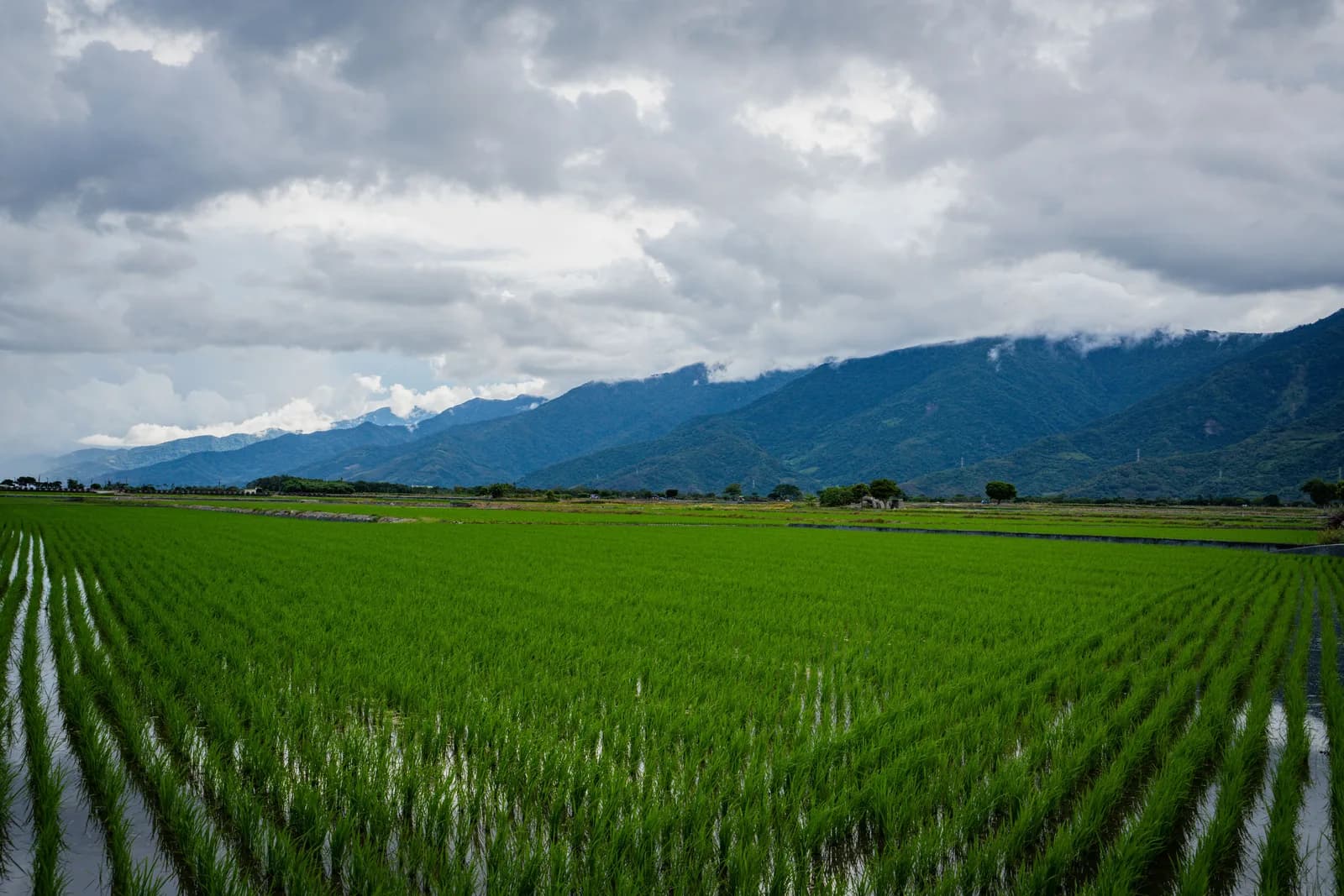
- The Huadong Rift Valley down the middle — a flat green corridor of rice paddies between the big mountains and the lower Coastal Range, where the famous "sea of rice" ripples in the wind.
Taitung is also one of the strongholds of Taiwan's Indigenous cultures. Several Austronesian peoples — among them the Amis, Paiwan, Puyuma, Bunun and Rukai — have lived here for thousands of years, and that presence isn't a museum exhibit. It's in the place names, the millet harvest festivals, the food, the music, the way a village walking trail is introduced by someone whose family has farmed that slope for generations. When you visit a community, you're a guest; go with a local host, and ask before you photograph people or ceremonies.
One more honest note on scale: Taitung County is long and thin. From the northernmost coastal village to the southern end is over two hours of driving. That single fact shapes every good itinerary here — which we'll come back to.
A useful reframe before you plan: Taitung is not a checklist destination. The reward isn't ticking off ten sights in a day; it's giving one stretch of coast or valley enough time to actually settle into you. Plan in half-days, not minutes.
How to get to Taitung
There are two sensible ways in from Taipei.
By train. The express trains — Puyuma and Tze-Chiang — run down the east coast and take roughly 3.5 to 4.5 hours depending on the service. The ride itself is part of the trip: ocean on one side for long stretches, mountains on the other. The catch is that these trains sell out, especially on weekends, holidays and through the summer festival. Book as far ahead as you can, and check the latest schedules and fares before you commit.
By flight. A domestic flight from Taipei Songshan (TSA) to Taitung (TTT) takes about an hour in the air. It's the fastest option and a good choice if your time is tight, though seats and fares move with the season — again, check the latest.
Which to pick depends on your priorities: the train is scenic, central and lets you watch the landscape arrive slowly; the flight saves half a day each way. Either way, the journey is genuinely part of the experience, not just transit. We've written a full breakdown — routes, booking timing, the trade-offs, and how to get from the station or airport to where you're staying — in our dedicated guide on how to get to Taitung.
The best time to visit
Taitung is a year-round destination, but the seasons genuinely change what you'll get.
| Season | What it's like | Good for |
|---|---|---|
| Spring (Mar–May) | Warm, mostly dry, green valley, fewer crowds | First-timers, valley and coast, the easiest all-round window |
| Summer (Jul–Aug) | Hot, long days, the balloon festival — but typhoon season | Balloons, beaches, lush rice; needs flexible plans |
| Autumn (Sep–Nov) | Settling skies after the storms, golden rice harvest | Calm weather, the rice "waves," quieter roads |
| Winter (Dec–Feb) | Mild and dry by Taiwan standards, low crowds, hot-spring season | Slow trips, soaking, comfortable touring |
The headline event is the 2026 Taiwan International Balloon Festival, running July 4 to August 20 at Luye Highland (Luye Gaotai), closed on Tuesdays. This year brings a first-ever Chiikawa collaboration — note that those character balloons are a ground display only, not something you ride. Tethered rides (the balloon stays roped to the ground and lifts you a short way up) run around NT$550 on weekdays and NT$650 on weekends, with online presale from late May. There are also pricier "free flights" that actually drift across the valley — but those are run by a private Luye operator, not an official festival item, cost considerably more (NT$9,000+ per person), and like everything balloon-related depend entirely on the weather. Launches are cancelled in poor conditions, full stop. Check the official announcements for the current schedule and prices before you build a day around them, and read our full Taitung balloon 2026 guide for the details.
That brings us to the one caveat we won't soften: Taitung's typhoon season runs roughly July to September, with frequent afternoon thunderstorms even on otherwise sunny days. Sunrise, clear stars and balloon launches are never guaranteed — per Taiwan's Central Weather Administration, conditions on the east coast can flip within an hour. So we plan accordingly, and so should you: put the weather-dependent things at dawn, keep a flexible midday, and treat the magic moments as gifts. Even if the balloon doesn't lift and the sunrise stays behind cloud, a trip built around the place itself — the road, the food, the quiet — won't be wasted.
The three axes: how to read what to see
Here's the mental model that saves first-timers the most grief. Don't plan Taitung as a scatter of pins on a map. Plan it as axes — corridors that run in roughly one direction, so the stops along each one actually connect. Chasing a wishlist across different axes means burning your days in the car. Pick a corridor, go deep, and you'll see more by seeing less.
There are three.
1. The Coast — where the road meets the Pacific
Drive north from Taitung City and Highway 11 runs right along the ocean. This is the axis for sea air, dramatic shorelines and Indigenous coastal villages.
- Sanxiantai — three rocky islets off a pebble shore, framed by a white lighthouse and a wave-cut platform you can see at low tide. One honest heads-up: the famous eight-arch footbridge out to the islets is closed for renovation (salt corrosion and earthquake damage) from mid-2026 until the end of 2027, so you can't walk across it right now. You view it from the mainland-side shore — and the visitor center, the islets and that long curve of bridge against the sky are still very much worth the stop. See our story on the Sanxiantai eight arches.
- Coastal villages like Dulan, with their surf-and-art-and-coffee mood, are easy, lingering stops along the same road.
A note for planners: Jialulan, a popular coastal viewpoint, is closed for renovation through December 31, 2026 — so skip it for now and don't build it into your route.
2. The Valley — rice, balloons and slow towns
Head inland and north through the rift valley along Highway 9, and the scenery turns from ocean to a green corridor of paddies hemmed by mountains.
- Brown Avenue (Boran Avenue) near Chishang — a single straight farm road running through the rice with no power poles in the frame, made for a slow bicycle ride. Read Brown Avenue, on foot and Chishang's rice waves.
- Luye Highland — the festival grounds, and a fine green hilltop to watch paragliders and the valley even outside balloon season. See Luye Deer Park.
- Slow valley towns like Chishang and Guanshan — rice-bowl lunchboxes, bike paths, and the kind of quiet that's the whole reason to come.
3. The South-Link — hot springs and the quiet south
South of the city, the South-Link line follows the coast and then cuts inland toward the mountains. This is the axis for hot springs and a softer, less-traveled feel.
- Duoliang Station — often called Taiwan's most beautiful station, a small disused platform perched above the Pacific. The view of the rails framed by blue is the whole point. See Duoliang Station, by the sea.
- Taimali — a low coastal town that catches a clean first light over the ocean on clear mornings (clear being the operative, un-guaranteed word). See Taimali's first light.
- Zhiben Hot Spring — a forested hot-spring valley, ideal in cooler months. See Zhiben hot spring.
A word on the famous "wild" spots: Lisong Hot Spring requires river-tracing with a licensed guide and carries real flash-flood risk; Jiaming Lake is a multi-day high-mountain hike needing mountain-entry and national-park permits; the Alangyi Trail needs both a permit and a licensed guide. These are genuine expeditions, not casual stops — gorgeous, but plan them as their own undertaking, not a detour.
For the full menu across all three axes, with a sense of what each place actually feels like, see our overview of things to do in Taitung.
Where to stay
You can stay almost anywhere along your chosen axis — a guesthouse in a rice-valley town, a surf hostel on the coast, a hotel in Taitung City as a base. The general advice: pick one base per axis and don't hop nightly, because moving lodgings every night turns a relaxing trip into a logistics exercise.
When you want the trip to feel like an actual break rather than a road rally, we partner with Luminous Hot Spring Resort — 11.3 hectares of grounds with its own hot springs, the kind of place where a stormy afternoon becomes a feature rather than a setback. You can read more on our stay page.
Getting around
We'll repeat this because it's the thing first-timers most underestimate: public transport in Taitung is sparse and infrequent. Trains link the main towns and a handful of tourist-shuttle buses cover popular routes, but the scenery you came for — the empty coast road, the rice avenue, the hilltop viewpoint — sits between the stops, and bus frequencies can leave you stranded for hours.
So most visitors do one of two things:
- Rent a car and self-drive, if you're comfortable driving in Taiwan (it drives on the right). This gives you the most freedom for those dawn starts and spontaneous pull-overs.
- Hire a chartered car with a local driver, if you'd rather not drive — a strong choice when you're jet-lagged, traveling with kids or elders, on a short trip where time matters, or you simply want to watch the valley go by instead of the GPS.
We run chartered cars ourselves, so we have skin in the game here — and we'll still tell you plainly when self-drive is the smarter, cheaper option for your trip. Either way, build in buffer time: distances look short on a map, but the good roads are slow on purpose.
Quick safety reminder for the coast, because the Pacific here is no joke: keep well clear of the tetrapods (concrete wave-breakers), respect sneaker waves that surge without warning, never enter the water in rain, thunder or typhoon conditions, and if children are near the water, one adult watches one child, full attention. The ocean is the best thing about this coast and the one thing that deserves real caution.
A simple way to plan your first trip
If you take nothing else from this guide, take this:
- Choose one axis — coast, valley or south-link — based on the mood you want. Don't try to thread all three on a short trip.
- Give yourself at least three days and two nights to do that axis justice; four or five lets you combine two.
- Front-load the weather-dependent moments at dawn, keep midday flexible, and hold the magic loosely.
- Sort out wheels early — a rental or a chartered car — because the gaps between the good bits are exactly where the public buses won't help you.
When you're ready to turn this into an actual day-by-day plan, our Taitung 3 days 2 nights guide walks through a few real, walkable routes for different kinds of travelers.
We came here to live slowly, and that's the one piece of advice we'd press hardest: come for the space, not the checklist. The east coast doesn't reward hurry. Give it room, and even the afternoon the storm rolls in — when the balloons stay grounded and you end up watching rain sheet across the valley from a hot spring — turns out to be exactly the part you remember.
Next —
Turn this guide into a real trip?
Leave the car, the stay, the meals and the local guide to people who live in Taitung.
Tell us on LINE the version you want and we'll lay it out for you.
A rough plan & quote the same day · no charge unless you're happy · no hard sell
See our journeys first →