Duoliang · Taiwan's Most Beautiful Station · A South-Link Story
The Platform Above the Sea
The trains no longer stop here. But the sea remains. The stationmaster of Taiwan's loveliest platform is the South-Link wind.
海岸編輯室·Updated 2026-05-28 · 4 min read
There is a station in Taiwan where the trains no longer stop.
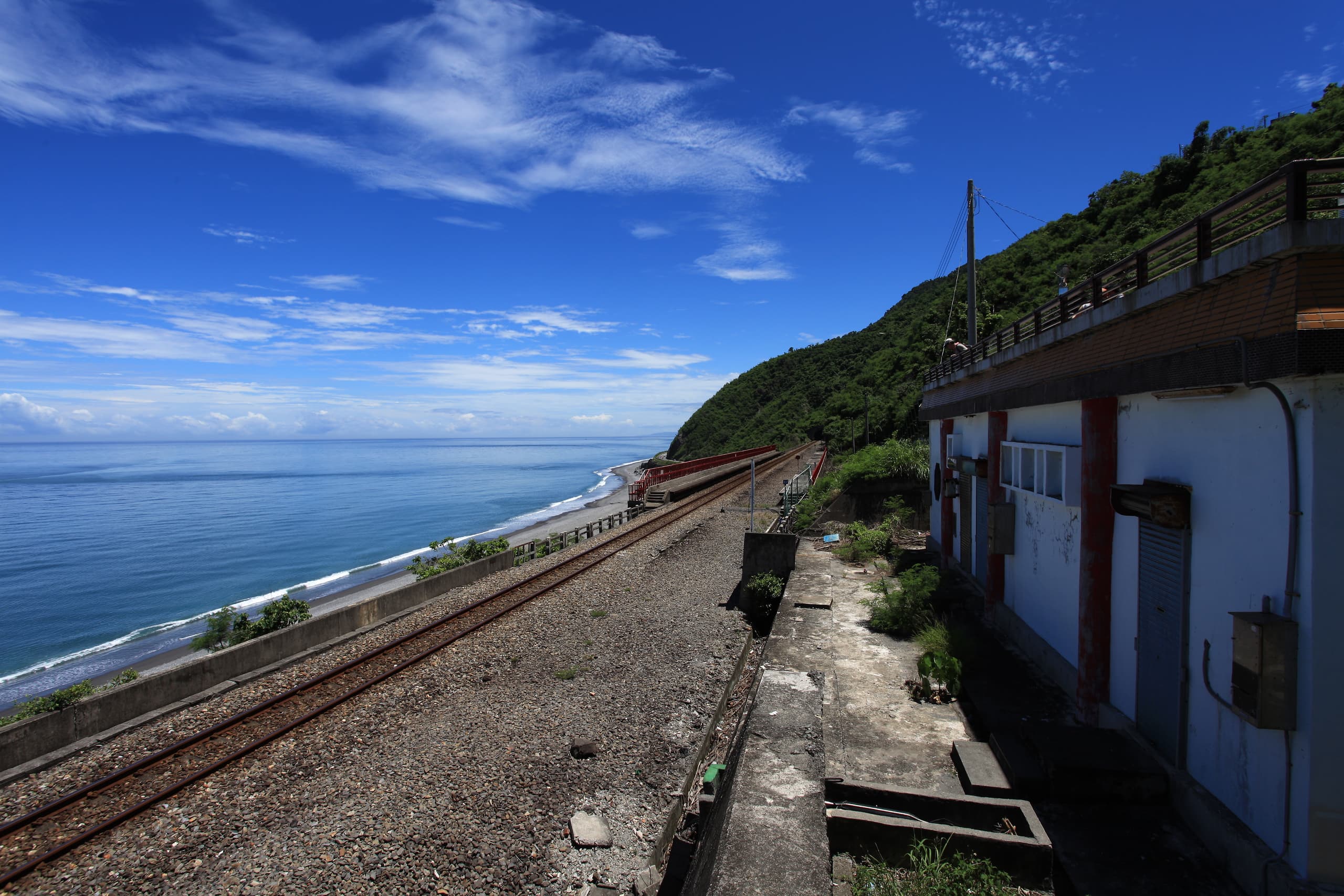
It is called Duoliang Station (多良車站). It lies in Taimali Township (太麻里鄉), Taitung County, on a hillside along the South-Link Railway. Built as an elevated structure into the slope, its ground floor held the waiting room and ticket office; the platform on the second floor faces the Pacific directly. It opened in 1992 and was decommissioned in 2006.
Ever since, the station has been waiting for a train.
Why It Is the Most Beautiful
Travel writers all call it "the most beautiful coastal railway station in Taiwan."
The reason is, in fact, quite physical. Along this stretch the South-Link Railway was carved into the flank of the Coastal Mountain Range, leaving the station no choice but to be built on the hillside. To solve the problem of the terrain, the old Taiwan Railways raised it on an elevated platform — and so, almost by accident, created the only station in all of Taiwan whose platform looks straight out onto the Pacific.
Stand on the second-floor platform and look down: no one waiting for a train, no smell of lunchboxes, no announcements over the loudspeaker. Only that rusted red iron railing, the unbelievably blue water below, and now and then a train that roars past without ever stopping.
「They decommissioned the station, but they could never decommission its charm.
」

Fourteen Years of a Station
1992 → 2006.
Just fourteen years. So brief that many who once boarded here were later left with nowhere to keep the memory.
The South-Link was the last railway in Taiwan to be completed, finally linking Taitung and Pingtung only in 1992. Duoliang was a small station built then to serve the daily commute of the local village. Later the population drifted away, the school was closed and merged, the buses took over — one reason after another nudged the station toward closure.
But the trains still pass through. Taiwan Railways turned the station into a viewing platform, throwing open the glass windows of the waiting room, folding back the iron grille at the ticket window. The rusted red railing stayed, the platform stayed, and that "Duoliang Station" sign stayed too.
Everything is still here. Only the trains no longer stop.
The Village of Tjavualji Below
At the foot of Duoliang Station lies Tjavualji (瀧部落), a village of the Paiwan (排灣族).
The Chinese character "瀧," chosen by the Japanese during the colonial era to render the village's name, means "water flowing down from a height" — and Tjavualji sits at the very last stretch where a mountain spring cuts down from the Central Mountain Range all the way to the Pacific.
Nearby stands the Xiangyang Xinchuan Woodcraft Workshop (向陽薪傳木工坊), where the people of the village take the driftwood left behind by great typhoons and turn it into tables and chairs, carvings, and everyday objects. This is the new way of life the Paiwan grew for themselves "after the station disappeared."
To come to Duoliang is not only to see the ruins of a railway. It is to see how a village goes on living "after the age of the railway has ended."
Getting There
- Location: No. 199, Duoliang Village, Taimali Township, Taitung County
- Transport:
- By car: from Provincial Highway 9 (the South-Link Highway), around the 415K mark, descend into Duoliang Village
- By public transport: take the Dingdong Bus mountain line 8132 / 8135 / 8135A / 8136 / 8137 / 8138, get off at Duoliang Station, and walk about 200 metres
- Best times:
- Early morning: the sea at its bluest, the fewest people
- Dusk: the twilight shifting in gradients across the water — the hour when most people come to take photographs
- Suggested stay: 30 minutes to 1 hour
- Nearby: Tjavualji village, the Xiangyang Xinchuan Woodcraft Workshop, Jinlun Hot Spring (金崙溫泉), the Taimali First Light Park (太麻里曙光園區)
- Note: the viewing platform is occasionally closed for structural safety; check the Taitung County Government tourism information before you set out
Afterword
The age of the train has ended. But Duoliang Station is still there, still watching the sea.
For city dwellers, this may be the easiest place to reach that has already been "forgotten by time" — about 50 minutes by car from downtown Taitung, then a 200-metre walk after you step off, and there you stand, on the most beautiful platform in Taiwan. The sea wind is still blowing. The sound of the waves is still here. The rusted red iron railing tells you that, once, people came and people went.
To stop, in itself, is a kind of arrival.
Next —
Want to turn this place into a trip?
Leave the car, the stay, the food, and the guide to us — a team that actually lives in Taitung. Message us on LINE with where and when, and we'll make it real.
A rough plan & quote the same day · no charge unless you're happy · no hard sell
See the related trip →Image credits
- Hero: 徐明章 · Wikimedia Commons · CC BY-SA 2.0
- Secondary: 花東縱谷國家風景區管理處 · media.taiwan.net.tw · 政府資料開放授權條款 第 1 版
Sources
More stories —
Other local stories
Beinan Site · Prehistoric Culture · A 5,000-Year Story
5,000 Years Ago, People Were Already Lighting Fires, Eating, and Burying Their Dead in Taitung
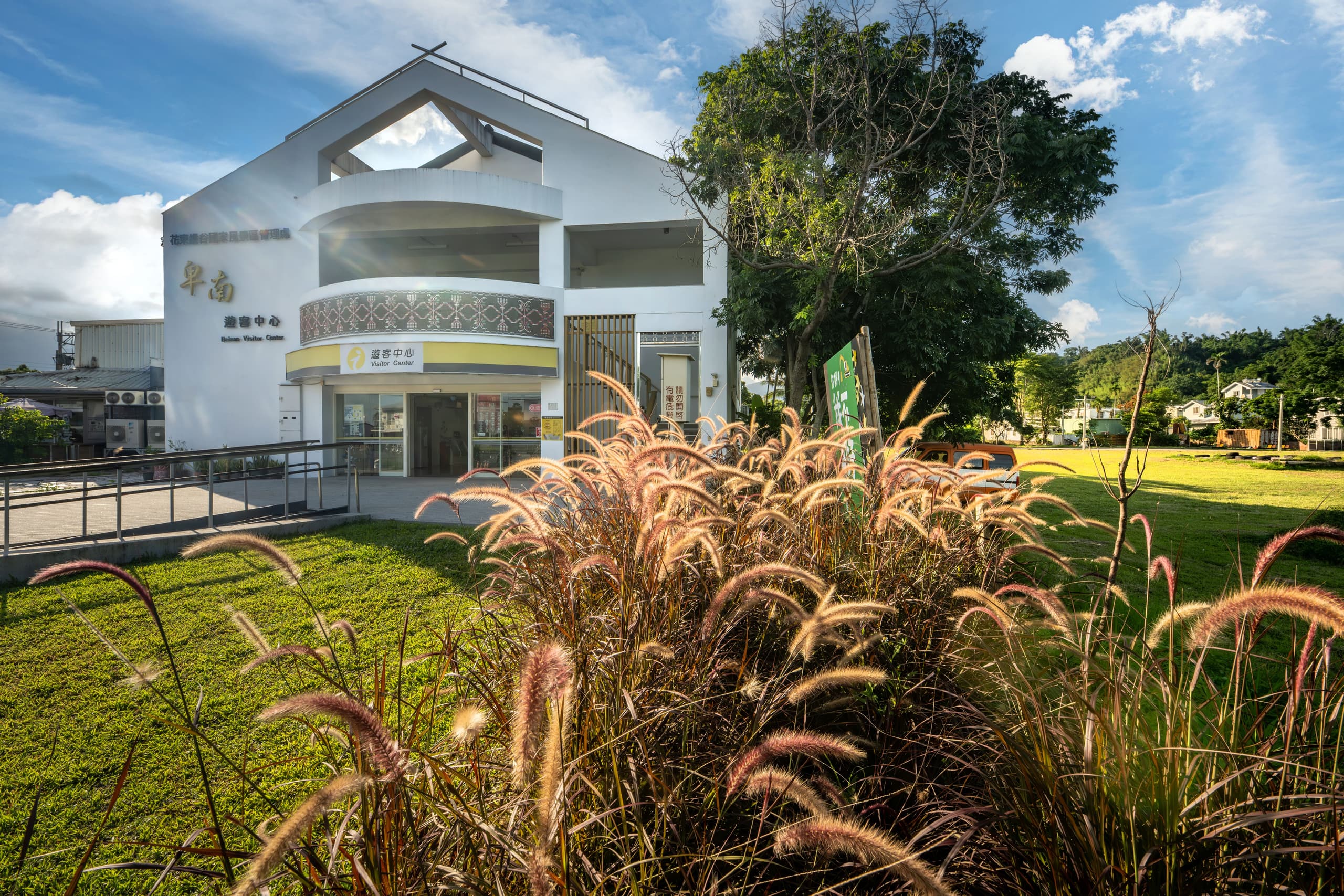
The Beinan Site, beside Kangle Station in Taitung City, is the largest prehistoric settlement ever found in Taiwan and the largest slate-coffin burial ground anywhere in the Pacific Rim and Southeast Asia. The Beinan Culture, which flourished here from roughly 5,000 to 2,300 years ago, left behind a complete record of dwellings, graves, jade, and pottery. Discovered in 1980 during construction of the South-Link Railway, it was excavated under archaeologists Sung Wen-hsun and Lien Chao-mei, yielding about 1,600 burials, over 99% of them slate coffins. The crescent stone pillars (3,500 years old) are the most striking remains still standing on the surface. For travellers who want to understand that Taitung was not first settled a mere hundred years ago.
2026-05-31 · 6 min read
Brown Avenue · The Version Without the Photo Line · A Story from Chishang
A Tree Named "Tea Offering," Lent for a Decade to a Movie Star
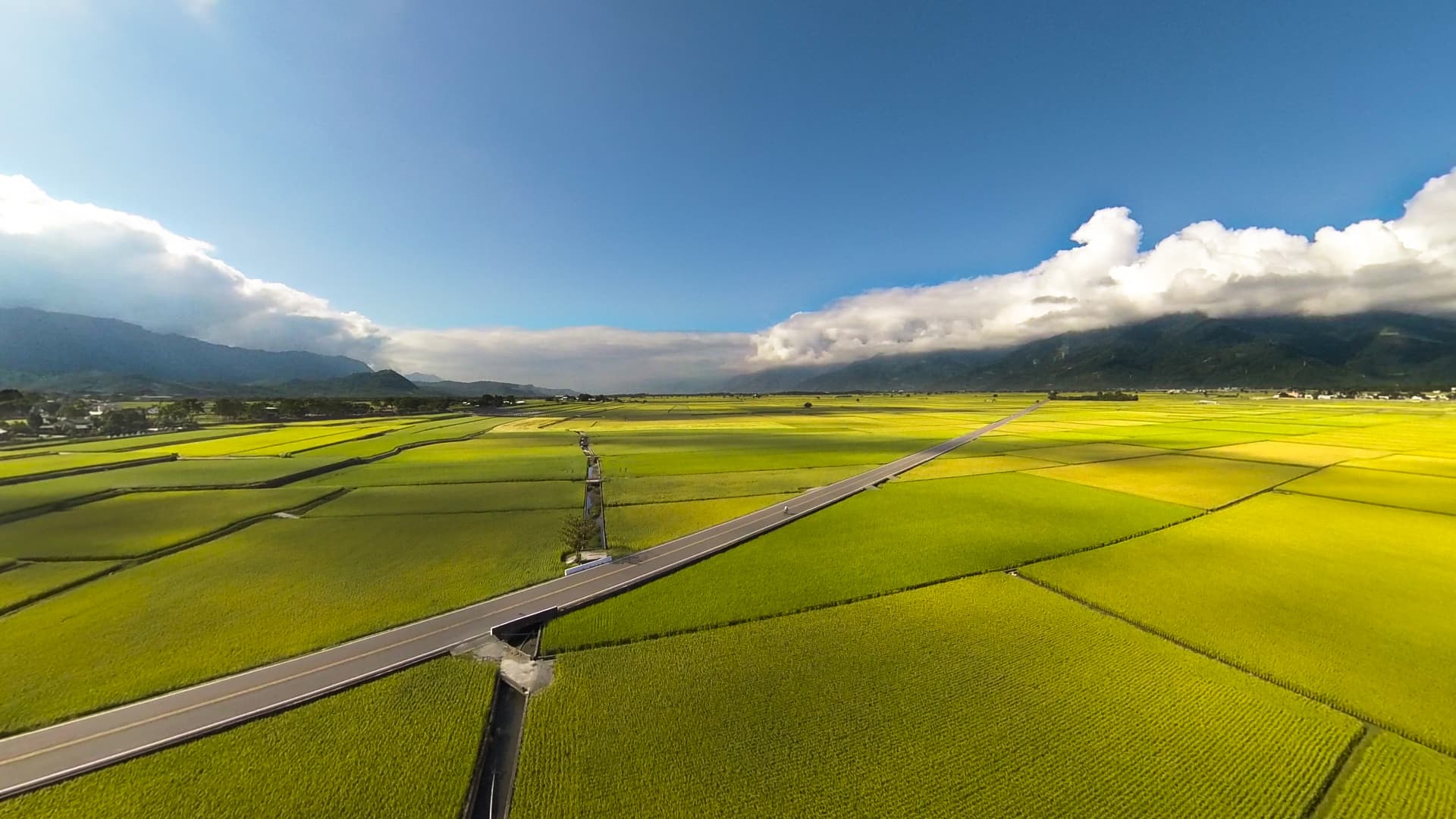
Brown Avenue runs 2.2 kilometres along Jinxin Road No. 3 in Chishang Township, Taitung, deliberately kept clear of power poles and houses. After Takeshi Kaneshiro drank tea beneath its bishopwood tree for an airline commercial in 2013, the road became famous overnight — but since 2023, the official name of the "Takeshi Kaneshiro Tree" has reverted to its original "Tea Offering Tree." As people who live in Taitung, we offer you the truest story of this road — including the tree's real name, how Chishang locals actually ride it, and which season is right.
2026-05-31 · 5 min read