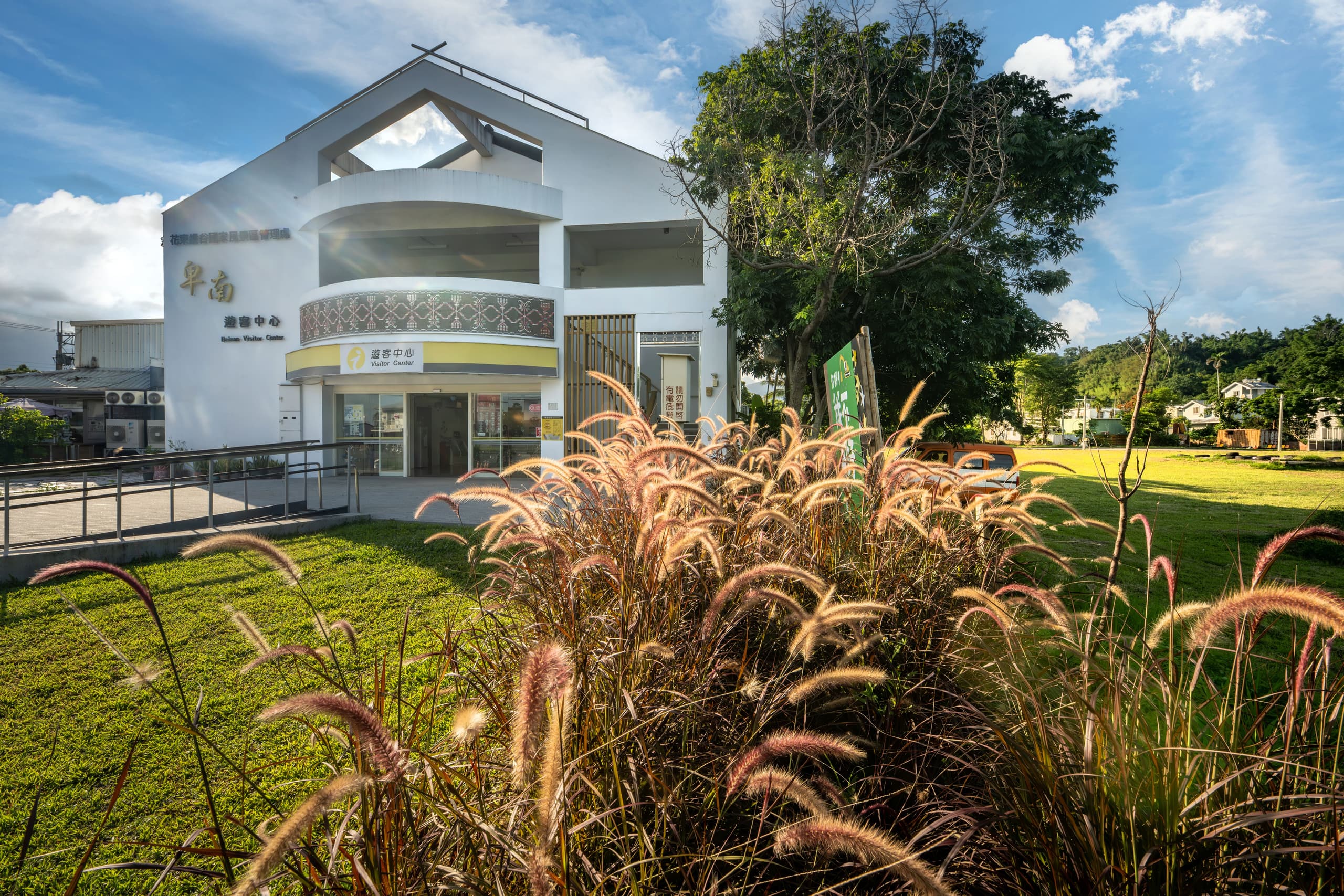
Beinan Site · Prehistoric Culture · A 5,000-Year Story
5,000 Years Ago, People Were Already Lighting Fires, Eating, and Burying Their Dead in Taitung
In 1980, railway construction hit slate coffins and the work stopped for eight years. About 1,600 burials were excavated; the crescent stone pillar has stood for 3,500 years. "The back mountain" is only what Taitung looks like from one direction.
部落編輯室·Updated 2026-05-31 · 6 min read
One morning in 1980, beside Kangle Station in Taitung, workers on the South-Link Railway were digging foundations.
Their shovels struck a slab of stone. Then a second, a third, a tenth — and every one of them was cut to the shape of a human body.
The work stopped. These were not stones. They were coffins, one after another, hewn from slate.
Construction halts, and the archaeologists rush down from Taipei
Word reached Taipei, and the National Taiwan University archaeologists Sung Wen-hsun (宋文薰) and Lien Chao-mei (連照美) came at once.
Over the next eight years, across this construction site, this stretch of ground, this quiet corner of the countryside, they unearthed about 1,600 burials, over 99% of them slate coffins.
And not only coffins. There were complete house foundations, hearths, fire-pits, jade, pottery, stone tools, bone implements — an entire village from 5,000 years ago, lying intact beneath the streets of present-day Taitung City.
The field of archaeology was stunned. Taiwan had never seen a prehistoric site on this scale.
It remains the largest single excavation in the history of Taiwanese archaeology.
Who were the Beinan people
Archaeologists named the culture preserved at this site the Beinan Culture (卑南文化) — a people who lived here continuously for roughly 2,700 years, from roughly 5,000 to 2,300 years ago.
(For comparison: China's first emperor unified the warring states only 2,200 years ago. The Beinan people lived on this land longer than the whole of recorded Chinese history.)
They:
- Ate millet, taro, fish, and game (inferred from stone tools and net sinkers)
- Wore bark cloth and woven leaf fibre (inferred from bone needles and weaving implements)
- Lived in rectangular dwellings on stone-pillared foundations, roofed with thatch (inferred from the floor plans of the site)
- Buried their dead in slate coffins — bodies on their side, knees drawn up, heads to the north, accompanied by jade and pottery (confirmed by more than 2,000 coffins)
Most remarkable of all — the Beinan people kept a tradition that astonishes archaeologists worldwide: they laid jade in the graves of their dead. And their jade was of the highest craft: the human-and-animal jade earring (人獸形玉玦), the double-hooked jade earring, the tubular jade beads — regarded as the summit of prehistoric jade art in Taiwan.
The crescent stone pillars: raised 3,500 years ago, still standing
The most striking remains visible on the surface of the Beinan Site are the crescent stone pillars.
- Made of slate, 3,500 years old
- 349 cm tall, 152 cm wide, 29 cm thick
- The top was once pierced by a round hole (perhaps a lintel or a structural element)
- Already broken when found, only a half-moon of the hole remained, shaped like a waxing crescent — and from this the "crescent stone pillars" take their name
Archaeologists suspect it may have been the entrance pillar of a building, or a marker for a gathering place. For generations, people danced beside it, deliberated beside it, lived their lives beside it.
No one knows why it cracked. No one knows who raised it. And no one knows how many weddings, funerals, and quarrels it has witnessed.
But it is still here.
Is there a link to today's Puyuma people
The most natural question is this — are the Beinan Culture and the "Puyuma" people (卑南族) who live nearby today the same group?
The scholarly answer is: "Possibly related, but you cannot draw an equals sign."
The Puyuma (in modern ethnological classification) number around 14,000 and are concentrated in Taitung City and Beinan Township, across eight communities including Nanwang, Zhiben, Jianhe, Chulu, Ligavung, and Katratripulr. They have their own language, legends, and ceremonies — the Monkey Festival for young men each July, the Great Hunting Festival each December.
The Beinan Culture (in archaeological classification) is a prehistoric culture spanning 5,000 to 2,300 years ago. It may well be one of the ancestral groups of the Puyuma, but more than 2,000 years separate them with no continuous written or oral record, so the two cannot simply be equated.
The more accurate way to put it: the ancestors of today's Austronesian peoples — the Puyuma, the Amis, the Paiwan, the Rukai, and others — may share blood and cultural ties with the Beinan people. The Beinan Culture was one of the early high points of Austronesian civilisation in Taiwan.
Why this matters to Taitung
Taitung's tourist story usually begins with the Japanese colonial era — the wooden inns of the Zhiben hot springs under Japanese rule, the Japanese settler village at Chishang, the opening of Taimali.
But the Beinan Site tells you that 5,000 years before the Japanese arrived, people were already here.
Before the Dutch, the Spanish, or the Han Chinese, this land already held a complete settlement, a craft of jade, a ceremony for death, a reverence for the sky and the mountains.
Taitung is not a "frontier." Taitung is one of the earliest cradles of human life in Taiwan.
Once you understand that, the way you look at Brown Avenue, the Zhiben hot springs, and Dulan Mountain will never be the same again.
How to see the Beinan Site
Half a day (the essentials)
| Time | Itinerary |
|---|---|
| 09:00 | National Museum of Prehistory (see the artifacts, grasp the timeline) |
| 11:00 | A 10-minute drive to Beinan Cultural Park (walk the site itself) |
| 12:00 | Stand five minutes before the crescent stone pillars |
| 12:30 | Slate Coffin Exhibition Hall + Visitor Center |
| 13:00 | Finish |
Paired with a day in Taitung City
- The half day above
- Afternoon: the Taitung Old Station District (the Tiehua Music Village closed at the end of 2023, and the area is still being rebuilt this year — check what's open that day before you go)
- Dinner: indigenous-style cuisine beside Mackay Memorial Hospital
- Dusk: Taitung Forest Park + Pipa Lake
Details easy to miss
- The Jade Gallery at the Museum of Prehistory: the Beinan Culture's human-and-animal jade earring is a national first-grade antiquity, seen nowhere else on earth
- The "3D reconstruction model" at the park's Visitor Center: a vision of the Beinan settlement 5,000 years ago, so you can picture concretely how these people lived
- Every April to May: the park hosts the Austronesian Cultural Festival, with tribal song and dance, markets, and forums — admission free
- The viewing pavilion before the crescent stone pillars: photographs from the original dig and filmed interviews with scholars — stand and watch for 20 minutes and there's real substance here
A closing word
Our travels are so often hijacked by novelty — the sight we haven't seen, the angle we haven't shot, the dish we haven't tasted.
But the Beinan Site reminds you: what truly moves us is not the new, but the old.
Old enough to make you feel small, to make humanity feel brief and time feel long — and then, somehow, you relax.
That crescent stone pillar will outlast your lifetime fifty times over. It has seen things you never will, weathered typhoons, earthquakes, and wars you never will.
Stand before it for five minutes, and you'll find that the colleague who annoyed you at work today really doesn't matter that much.
Further reading:
- Taromak Rukai community: Millet and Swings, the Home of the Eastern Rukai
- The Bunun of Sasadan: The Trees That Walk
- A Taitung 3-day, 2-night journey including the Beinan Culture: Taitung in 3 Days, 2 Nights
Next —
Want to turn this place into a trip?
Leave the car, the stay, the food, and the guide to us — a team that actually lives in Taitung. Message us on LINE with where and when, and we'll make it real.
A rough plan & quote the same day · no charge unless you're happy · no hard sell
See the related trip →Image credits
- Hero: 花東縱谷國家風景區管理處 · media.taiwan.net.tw · 政府資料開放授權條款 第 1 版
- Secondary: 交通部觀光署 · media.taiwan.net.tw · 政府資料開放授權條款 第 1 版
Sources
More stories —
Other local stories
Brown Avenue · The Version Without the Photo Line · A Story from Chishang
A Tree Named "Tea Offering," Lent for a Decade to a Movie Star
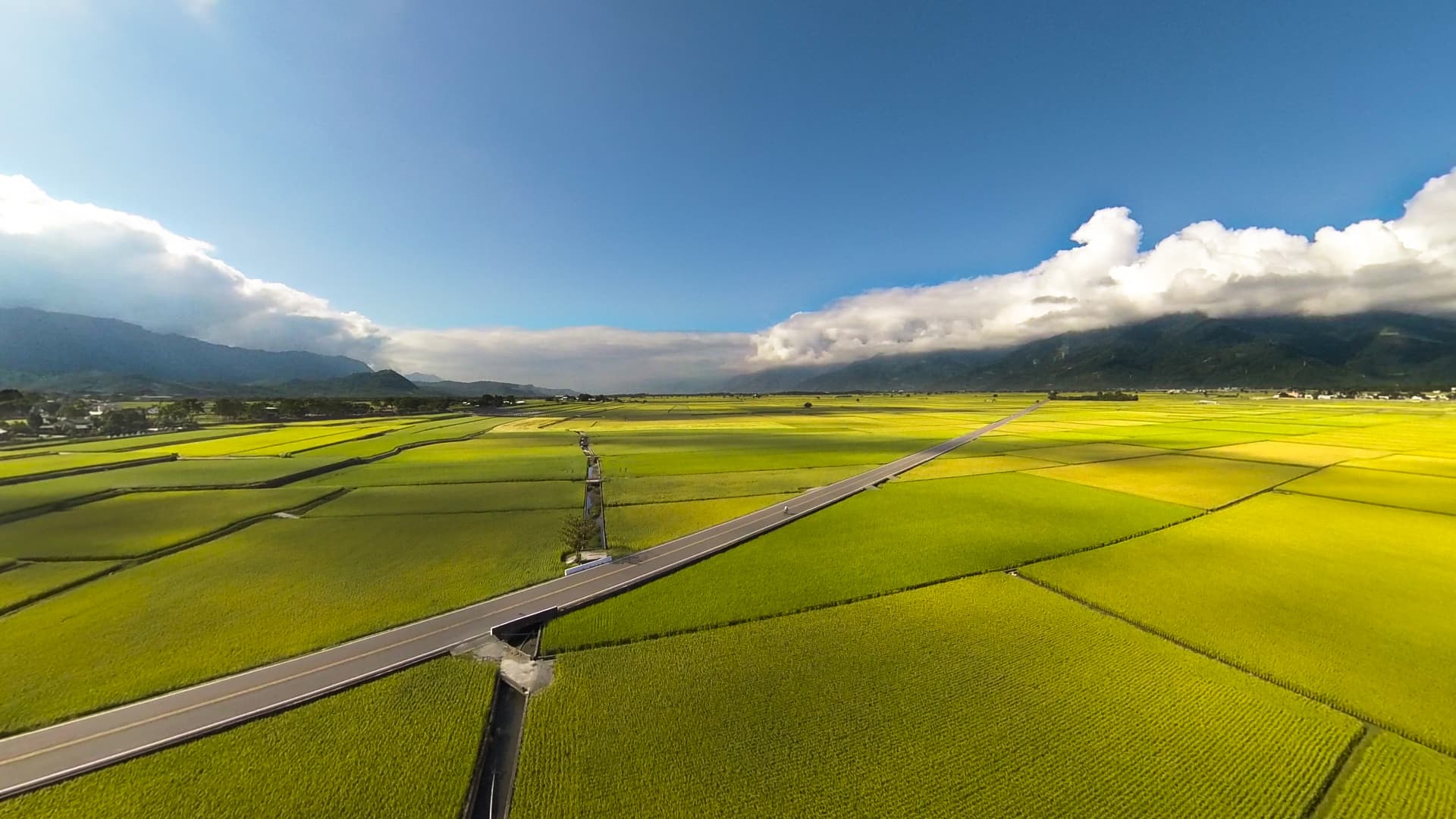
Brown Avenue runs 2.2 kilometres along Jinxin Road No. 3 in Chishang Township, Taitung, deliberately kept clear of power poles and houses. After Takeshi Kaneshiro drank tea beneath its bishopwood tree for an airline commercial in 2013, the road became famous overnight — but since 2023, the official name of the "Takeshi Kaneshiro Tree" has reverted to its original "Tea Offering Tree." As people who live in Taitung, we offer you the truest story of this road — including the tree's real name, how Chishang locals actually ride it, and which season is right.
2026-05-31 · 5 min read
Chenggong · Billfish Season · A Fishing-Port Story
To Spear One Billfish, You Stand on the Waves for Three Hours
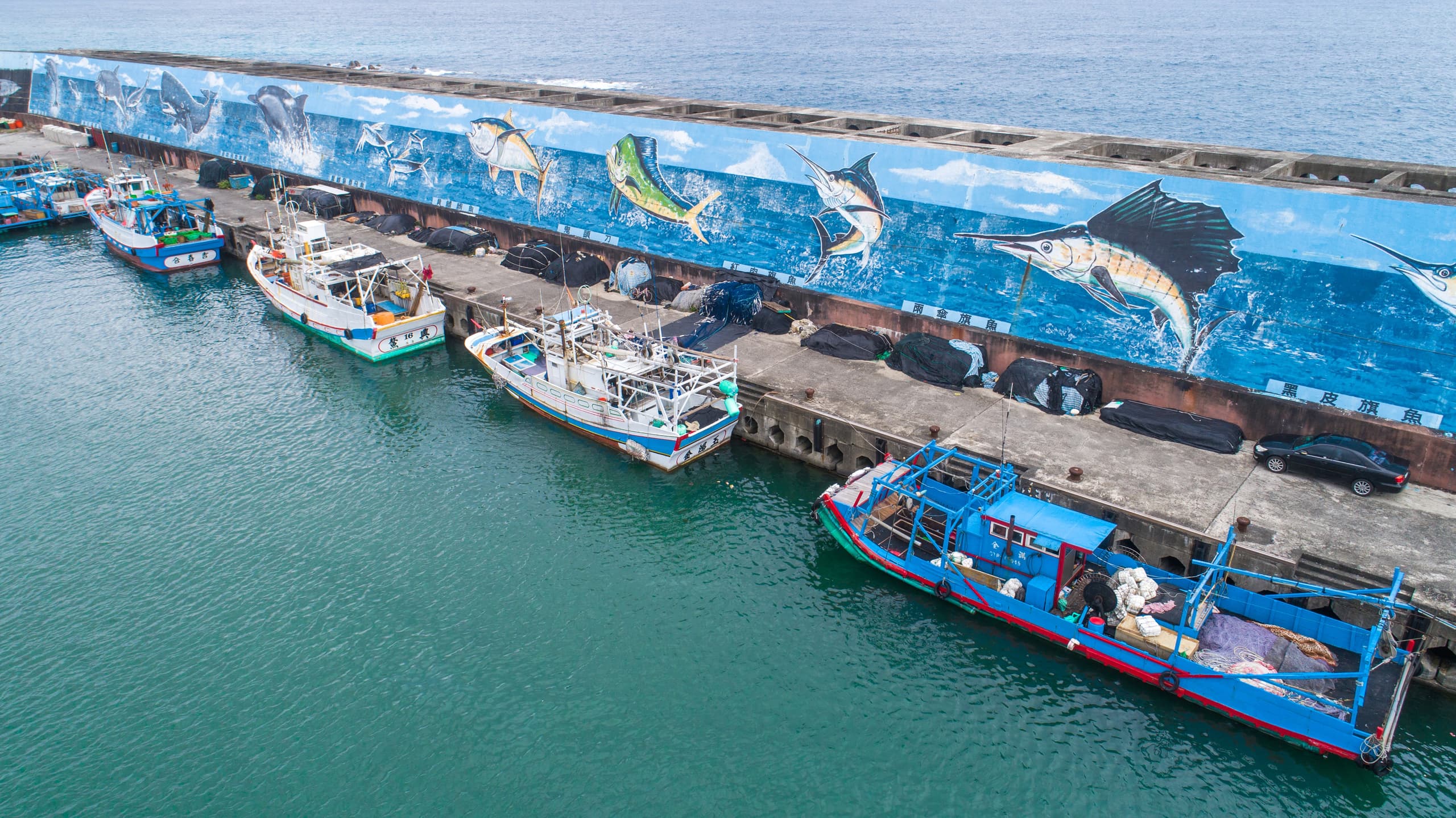
Chenggong (成功) is the largest fishing port on the East Coast, and the Xingang Fish Market is Taitung's busiest hub for seafood. From September to March each year comes the harpoon-billfish season — a traditional way of fishing that dates back to the Japanese colonial era and survives to this day. A fisherman stands at the bow with a four-metre iron harpoon and waits, in wind and swell, for a black marlin to rise to the surface. Written for anyone who wants the freshest billfish in Taiwan, and for travellers curious about how a single fish makes its way to the table.
2026-05-31 · 5 min read