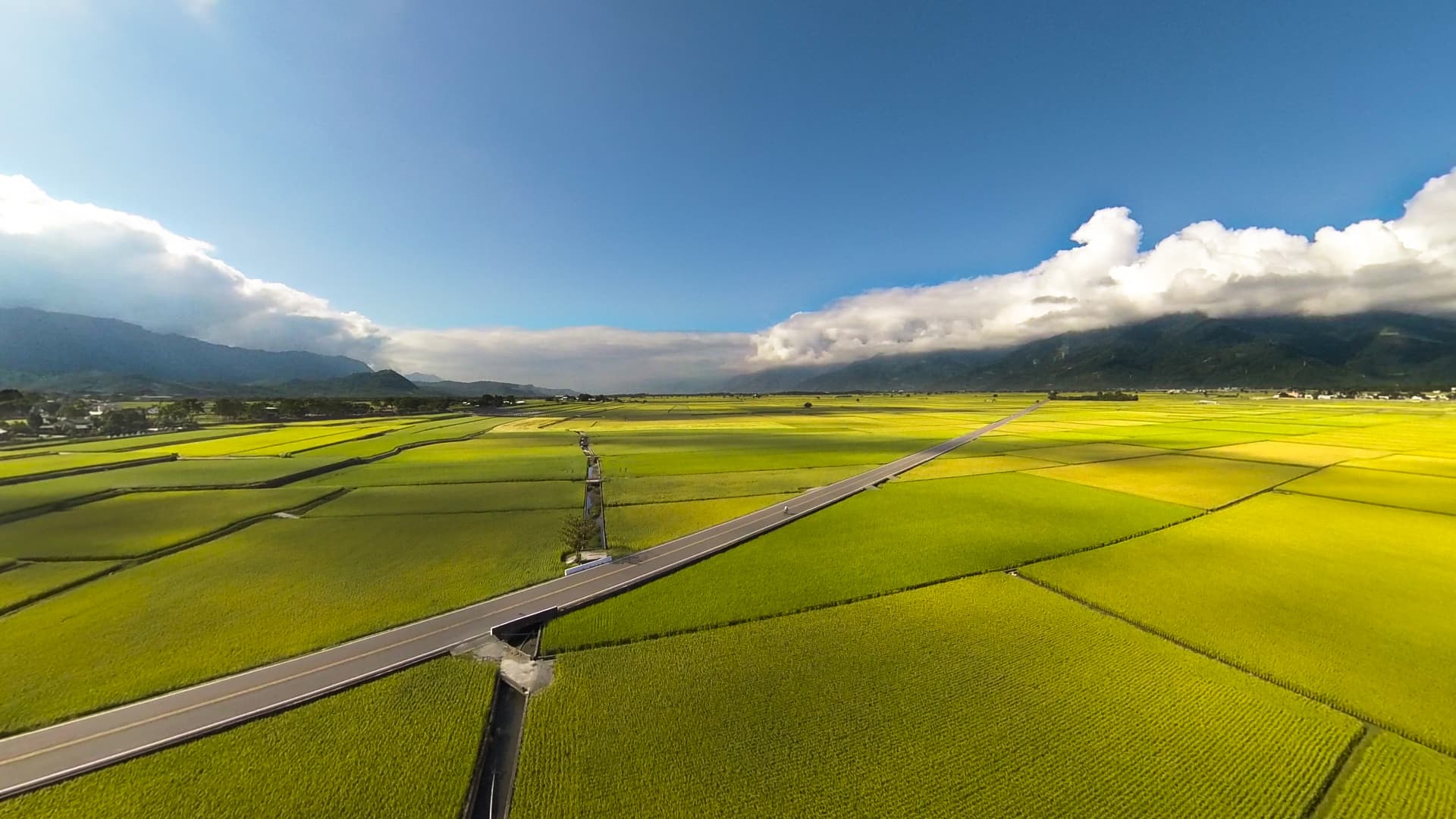
Brown Avenue · The Version Without the Photo Line · A Story from Chishang
A Tree Named "Tea Offering," Lent for a Decade to a Movie Star
Long before Takeshi Kaneshiro sat beneath this bishopwood tree to drink tea in 2013, the people of Chishang had been cycling this 2.2-kilometre stretch of rice-field road for decades. Written for travellers who want the real version of Brown Avenue.
縱谷編輯室·Updated 2026-05-31 · 5 min read
Everyone who comes to Taitung is told the same thing: "In Chishang, you have to see Brown Avenue."
And after they go, the reaction tends to fall into one of three:
- "Yes — world-class rice fields!"
- "How are there this many people? I queued ten minutes in front of the Takeshi Kaneshiro Tree just for one photo."
- "Honestly, it was fine — not that different from the other fields in Taitung."
All three reactions are fair. But none of them is the answer a Chishang local would give you.
The first thing a Chishang local will tell you: that tree isn't called the Takeshi Kaneshiro Tree
Its real name is the "Tea Offering Tree" (奉茶樹).
The tree at the edge of Brown Avenue is a bishopwood (茄苳, Bischofia javanica). It is more than 100 years old, and long ago the people of Chishang would rest in its shade and offer tea to the farmers and travellers passing by — which is how it earned the name "Tea Offering Tree."
In 2013, Takeshi Kaneshiro (金城武) filmed a commercial for EVA Air, sitting beneath this tree to drink a can of Mr. Brown coffee — and once it aired, the tree became an Instagram must-shoot, a byword for Chishang, and a magnet for travellers pouring in from across Taiwan.
But here is what you may not know: EVA Air and the Chishang Township Office signed a naming-sponsorship agreement, for a term of 10 years. When that agreement expired in 2023, the Taitung County Government issued a notice:
The name "Takeshi Kaneshiro Tree" returns to its original "Tea Offering Tree," and the name "Takeshi Kaneshiro Tree" may no longer be used in any official capacity.
So officially it is the "Tea Offering Tree," while in everyday speech people still call it the "Takeshi Kaneshiro Tree." Both are correct — but the name "Tea Offering" is the older one, and the one with the story.
Why this road has no power poles
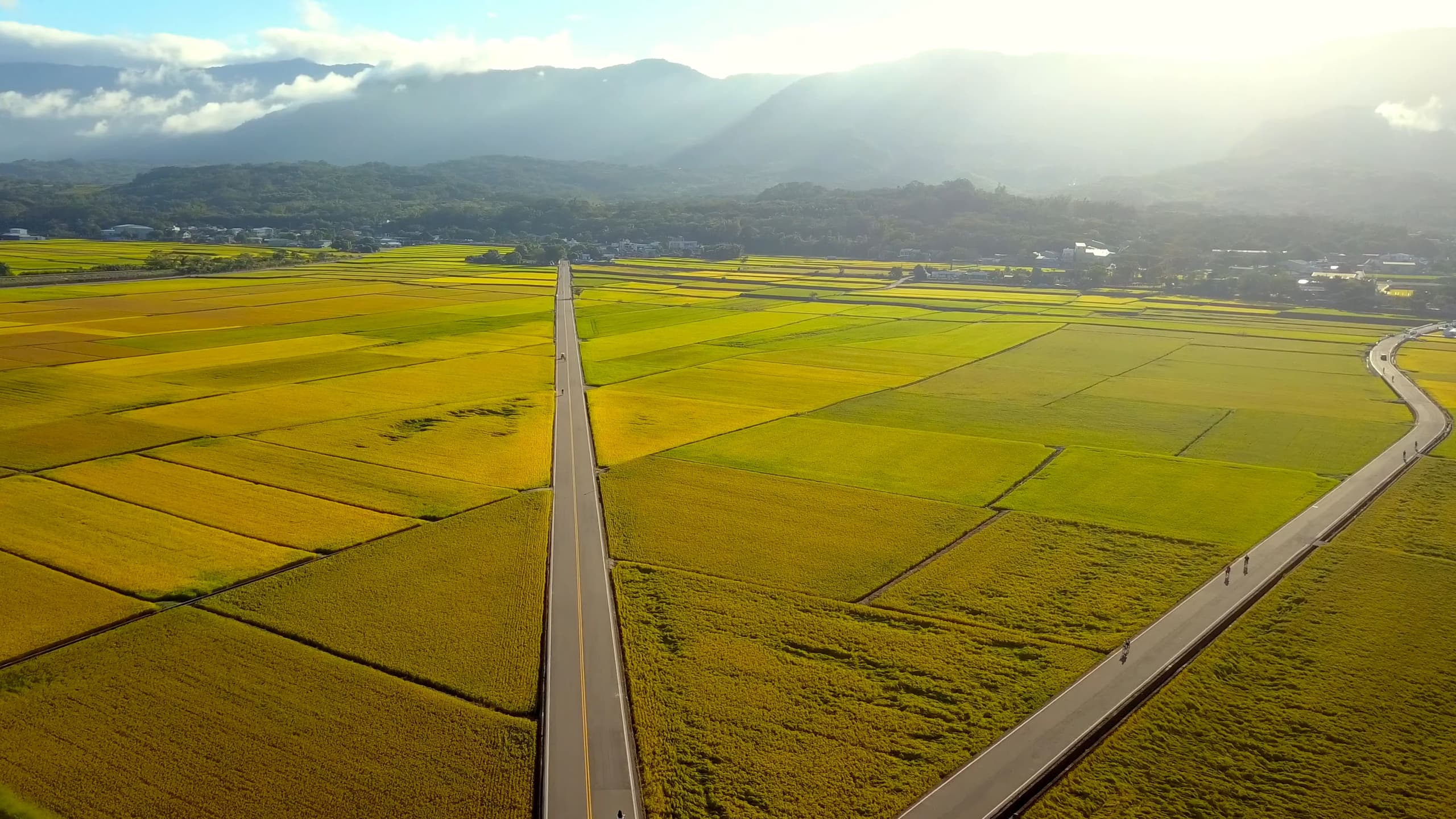
Brown Avenue (officially "Jinxin Road No. 3") runs 2.2 kilometres, straight through the heart of the Chishang rice fields.
What makes it singular is exactly what's missing — no power poles, no wires, no houses. This is no accident: it is the result of the Chishang Township Office choosing, during the farmland consolidation, to bury the power cables underground.
And so Brown Avenue is one of the few places in Taiwan where you can photograph rice fields, mountains, and sky with nothing in the way. When Mr. Brown coffee's 2006 commercial first made the road famous, the people of Chishang weren't surprised — "This land," they'd say, "was always worth seeing."
How Chishang locals actually ride this road
Brown Avenue is closed to cars and motorcycles (open only to farm machinery and local residents), so visitors can only walk or cycle.
But when Chishang locals ride this road, it isn't for the photo:
- 5–6 a.m.: farmers ride out on motorbikes to ready the day's work in the fields
- 4–5 p.m.: schoolchildren take the long way home on their bicycles
- 6–7 p.m. (dusk): residents stroll, walk the dog, watch the sun go down
- Weekends: whole families ride e-bikes from home out to Dapo Pond (大坡池) to circle the water
To a Chishang local, Brown Avenue isn't a "sight" — it's the road to and from work. The tourist bike-rental shops are, for them, just an afterthought — the truly beautiful moment is never those thirty seconds at noon, queuing for a photo.
The hours when it's actually worth going
| Time | What a Chishang local thinks | What it's like for visitors |
|---|---|---|
| 05:00-07:00 | The most beautiful. The light is slanting, the people are nil, the rice still wears its dew | Almost no one |
| 07:00-09:00 | Still good, but the light is starting to harden | The first arrivals |
| 09:00-11:00 | Ordinary | Tour buses roll in, crowded |
| 11:00-14:00 | The worst time to come | The busiest — midday light at its harshest, the heat at its peak |
| 14:00-16:00 | Fine, the light begins to soften | Still busy, but thinning |
| 16:00-18:00 | The second-most beautiful. The light turns golden, the crowds dwindle, the wind picks up | Moderate |
| After 18:00 | Astonishingly lovely, but unlit — take care | Almost no one |
A Chishang local will tell you: come to Brown Avenue at 6 in the morning or 5 in the afternoon. Come at noon, and you may as well not have come at all.
More than the Tea Offering Tree
A few underrated spots line the length of Brown Avenue:
- The Jolin Tree (蔡依林樹): about 200 metres south of the Tea Offering Tree, this is the bishopwood that the singer Jolin Tsai (蔡依林) photographed for a guesthouse advertisement — a little smaller than the Tea Offering Tree, far fewer people, and just as lovely to frame
- Heaven's Road (天堂路): a small side branch where Brown Avenue extends north, untaken by the Kaneshiro effect — a straight road running into the mountains, with light and scenery cleaner than Brown Avenue's own
- Heaven's Swing (天堂鞦韆): near the end of Heaven's Road, a wooden swing put up by a Chishang guesthouse owner — free to ride, and a fine composition
- Daguan Pavilion (大觀亭): a small pavilion near Brown Avenue with a 360-degree view across the whole Chishang basin
Which season is right
Chishang's rice waves crest three times a year:
| Season | The view |
|---|---|
| late March–April | after the seedlings go in, the flooded paddies mirror the Central Mountain Range like glass |
| late May–June | the green-wave season, the rice heads just emerging, the whole field shimmering when the wind passes |
| late October–November | the golden harvest, all of Chishang a sea of gold |
| December–February | fallow season, a carpet of rape blossom and cosmos |
Avoid: July–September (grain-ripening time, but typhoon-prone) and weekend noons (forever the most crowded).
How to get to Brown Avenue
| Way | Details |
|---|---|
| Chishang Station | a 20-minute walk (2 km), heading toward Dapo Pond |
| E-bike | rent in Chishang town, NT$ 200–300/day — the most comfortable way |
| Shuttle bus | the Chishang Township Office sometimes runs a free weekend shuttle (check the current notice) |
| On foot | a slow 30–40 minute walk — the truest way to feel Chishang's pace |
Forbidden: cars and motorcycles may not enter Brown Avenue; offenders will be fined.
A closing word
We've all heard the phrase "overtourism" — but the people of Chishang chose a different road.
They didn't fence Brown Avenue off and charge admission, didn't line it with shops, didn't let cars and motorcycles in. They chose to let the road stay exactly what it is — a farm road — so that the children of ten years from now can still see the same Tea Offering Tree that Kaneshiro once sat beneath, the same rice waves, the same sky.
The next time you come to Brown Avenue, rise early, walk slowly, and don't forget the story of the Tea Offering Tree.
Before that tree was borrowed to be a billboard, it had already been offering tea to the people of Chishang for 100 years.
Further reading:
- The story of Chishang as a whole: The Four Seasons of Chishang's Rice Waves
- The valley in two days, Chishang included: Valley Rice Country, 2 Days
Next —
Want to turn this place into a trip?
Leave the car, the stay, the food, and the guide to us — a team that actually lives in Taitung. Message us on LINE with where and when, and we'll make it real.
A rough plan & quote the same day · no charge unless you're happy · no hard sell
See the related trip →Image credits
- Hero: 花東縱谷國家風景區管理處 · media.taiwan.net.tw · 政府資料開放授權條款 第 1 版
- Secondary: 花東縱谷國家風景區管理處 · media.taiwan.net.tw · 政府資料開放授權條款 第 1 版
Sources
More stories —
Other local stories
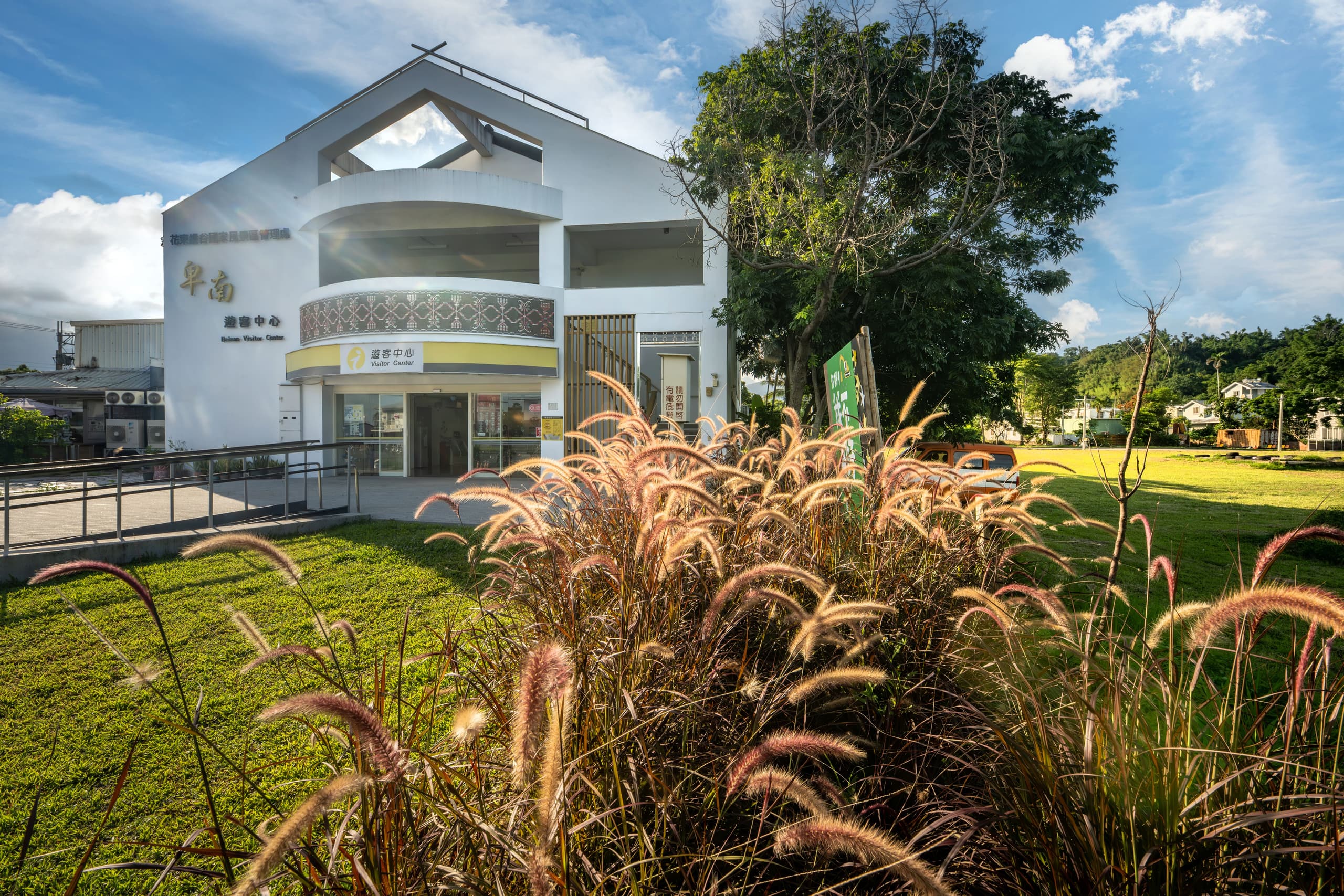
Beinan Site · Prehistoric Culture · A 5,000-Year Story
5,000 Years Ago, People Were Already Lighting Fires, Eating, and Burying Their Dead in Taitung
The Beinan Site, beside Kangle Station in Taitung City, is the largest prehistoric settlement ever found in Taiwan and the largest slate-coffin burial ground anywhere in the Pacific Rim and Southeast Asia. The Beinan Culture, which flourished here from roughly 5,000 to 2,300 years ago, left behind a complete record of dwellings, graves, jade, and pottery. Discovered in 1980 during construction of the South-Link Railway, it was excavated under archaeologists Sung Wen-hsun and Lien Chao-mei, yielding about 1,600 burials, over 99% of them slate coffins. The crescent stone pillars (3,500 years old) are the most striking remains still standing on the surface. For travellers who want to understand that Taitung was not first settled a mere hundred years ago.
2026-05-31 · 6 min read
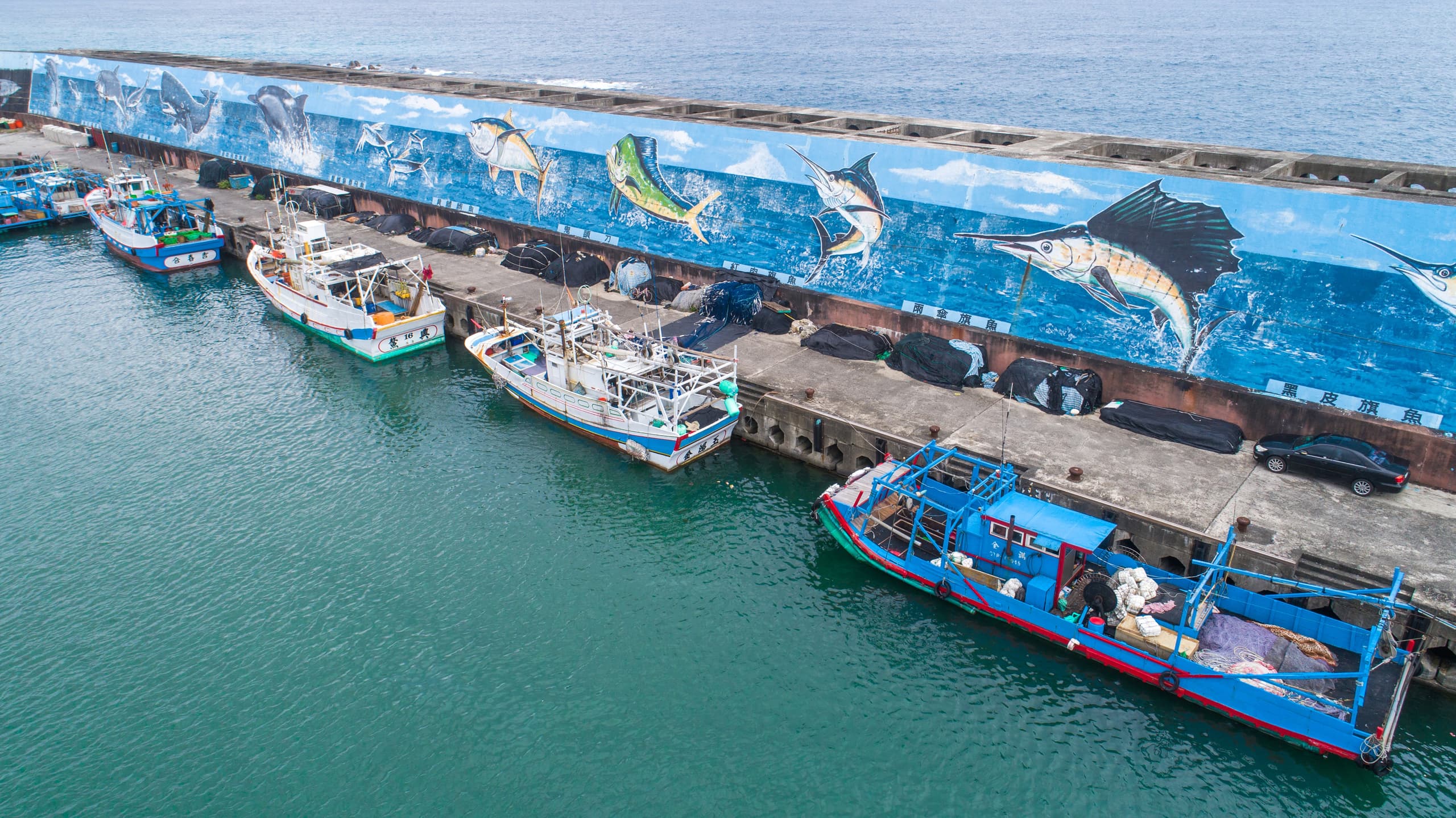
Chenggong · Billfish Season · A Fishing-Port Story
To Spear One Billfish, You Stand on the Waves for Three Hours
Chenggong (成功) is the largest fishing port on the East Coast, and the Xingang Fish Market is Taitung's busiest hub for seafood. From September to March each year comes the harpoon-billfish season — a traditional way of fishing that dates back to the Japanese colonial era and survives to this day. A fisherman stands at the bow with a four-metre iron harpoon and waits, in wind and swell, for a black marlin to rise to the surface. Written for anyone who wants the freshest billfish in Taiwan, and for travellers curious about how a single fish makes its way to the table.
2026-05-31 · 5 min read