Haiduan · Lisong · A World-Class Story
The Jade in the Deep South-Cross Valley
Taiwan's most beautiful wild hot spring lies hidden in a deep gorge off the South-Cross Highway — you rope down 400 metres to reach it.
Sam Hu·Updated 2026-05-27 · 5 min read
In Taiwan, there is a hot spring you must learn to rope down a cliff to bathe in.
It is called Lisong Hot Spring (栗松溫泉). It lies at the 168.5-kilometre mark of the South-Cross Highway (Provincial Highway 20, 台 20 線), 1,547 metres above sea level, deep in a valley of Haiduan Township (海端鄉) in Taitung County — the traditional homeland of the Bunun (布農族).
It is a two-hour drive up from Taitung City. An hour and a half from Guanshan (關山). And then, when your car finally pulls over beside that unremarkable trailhead at the roadside, the real story begins.
The Ninety-Degree Descent
From the trailhead to the streambed is a walk of 40 to 60 minutes. A drop of 400 metres. The first stretch is a gentle slope; the last is almost vertical — ninety degrees — and you lower yourself down, rope length by rope length, on lines that hikers and locals have tied off along the way.
Bring gloves. Wear shoes you don't mind ruining. Carry a light daypack — both hands must stay free for the rope.
This is no admission ritual a tourist site should ask of you. But Lisong was never a tourist site. It is nature hiding a piece of jade in the deepest fold of the valley, to see whether you are willing to walk all the way down and take it.
How the Jade Came to Grow
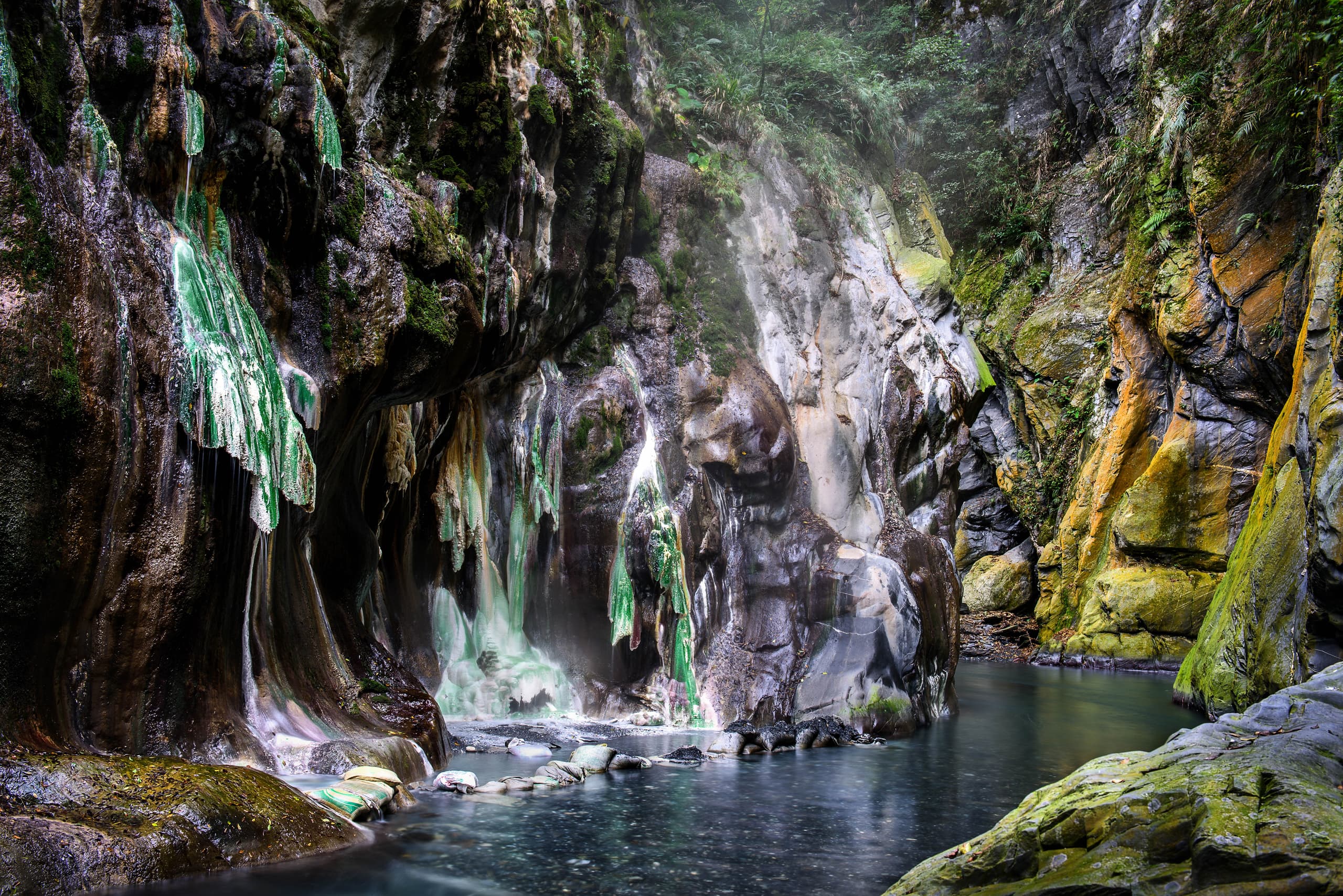
When you reach the bottom of the rope, this is what waits: white steam curling up from the cracks in the rock, the cliff face a sheet of emerald green shot through with pale orange and creamy white, as if a giant had flung paint across it. The stream at your feet runs ice-cold, yet draw near the rock and the heat stings to the bone.
This is colour that nature took thousands of years to make, slowly, by hand. Here is how:
- The spring water is rich in calcium carbonate; as it seeps from the rock and cools, the dissolved minerals crystallise and settle out
- Emerald-green spring grass — a heat-loving algae — clings to the surface of those crystals
- The two layered together become a vivid, jade-like green
The water runs 45–65°C, a mildly alkaline sodium bicarbonate spring of around pH 7, rich in minerals. People call it "Taiwan's most beautiful spring."
「Lisong, with its curling white steam, is a gift the heavens gave to Taitung alone.
」

Time, Grown One Layer at a Time
People who have known Lisong for years will tell you that the Lisong of today is no longer the Lisong of a decade ago.
Some of the crystal has been damaged. People have broken pieces off, carried away "souvenirs," cut their marks into the rock. The cliff grows a single centimetre over hundreds of years; ruin takes only a second.
「Beauty like this is something that grows slowly, drop by drop, over time.
」
More and more people come to Lisong. But this valley cannot hold an ever-rising tide of footprints the way a reservoir holds water. So in this piece we will not hand you GPS coordinates, will not teach you the fastest shortcut down. We want you to come — but come slowly, come gently, and take nothing away again.
Why It Has to Be So Hard
"Beauty is never something you pick up along the road. It is something you earn along the way."
What people remember about Lisong is not how green it is, but that moment — your knees still trembling from fifty metres of rope, when you lift your head and see the white steam rising off the jade-green wall.
If a cable car ran to the trailhead, by the second day there would be five hundred people taking selfies here. But because Lisong chose to be hard to reach — open only for a dozen or so days each dry season, holding no more than five or six people at a time, demanding rope the whole way down — it remains what it has always been.
This is nature's refusal to mark itself down.
How to Go Safely
- Location: the 168.5K mark of the South-Cross Highway (Provincial Highway 20, 台 20 線), or the trailhead beside Motian Fude Temple (摩天福德宮, 169K)
- Elevation: 1,547 metres
- Best season: the dry season, December to March, when the stream runs low and the descent is possible. Do not risk it during the high-water months of May to October.
- Gear: gloves, non-slip shoes, a backpack, rain gear, a headlamp (for safety's sake), a light towel
- Check before you set out: the South-Cross Highway is prone to landslides and closures, so you must confirm road conditions before leaving. We suggest asking at the Tianlong Hotel (天龍飯店) — the lodging and information hub along the South-Cross route at Wulu (霧鹿)
- Never go alone: the roped sections require people to look out for one another
- No marked trail: signage along the way is unclear, so be sure to go with an experienced guide
A Final Word
Lisong is not a place for people who just want a photo to check off. It is for people willing to drive two hours, rope their way down for another hour, and in the end be content to stay only thirty minutes before climbing back out.
Some who have been will come home and say the water wasn't as hot as they'd imagined, the rock not as green. And still they go again. Because they know that those thirty minutes of quiet — nothing in the valley but the sound of water and your own breathing — grow harder to find in this world all the time.
You don't come to Lisong to look. You come to trade a stretch of time back to yourself.
Next —
Want to turn this place into a trip?
Leave the car, the stay, the food, and the guide to us — a team that actually lives in Taitung. Message us on LINE with where and when, and we'll make it real.
A rough plan & quote the same day · no charge unless you're happy · no hard sell
See the related trip →Image credits
- Hero: 李白士 · Wikimedia Commons · CC BY 2.0
Sources
More stories —
Other local stories
Beinan Site · Prehistoric Culture · A 5,000-Year Story
5,000 Years Ago, People Were Already Lighting Fires, Eating, and Burying Their Dead in Taitung
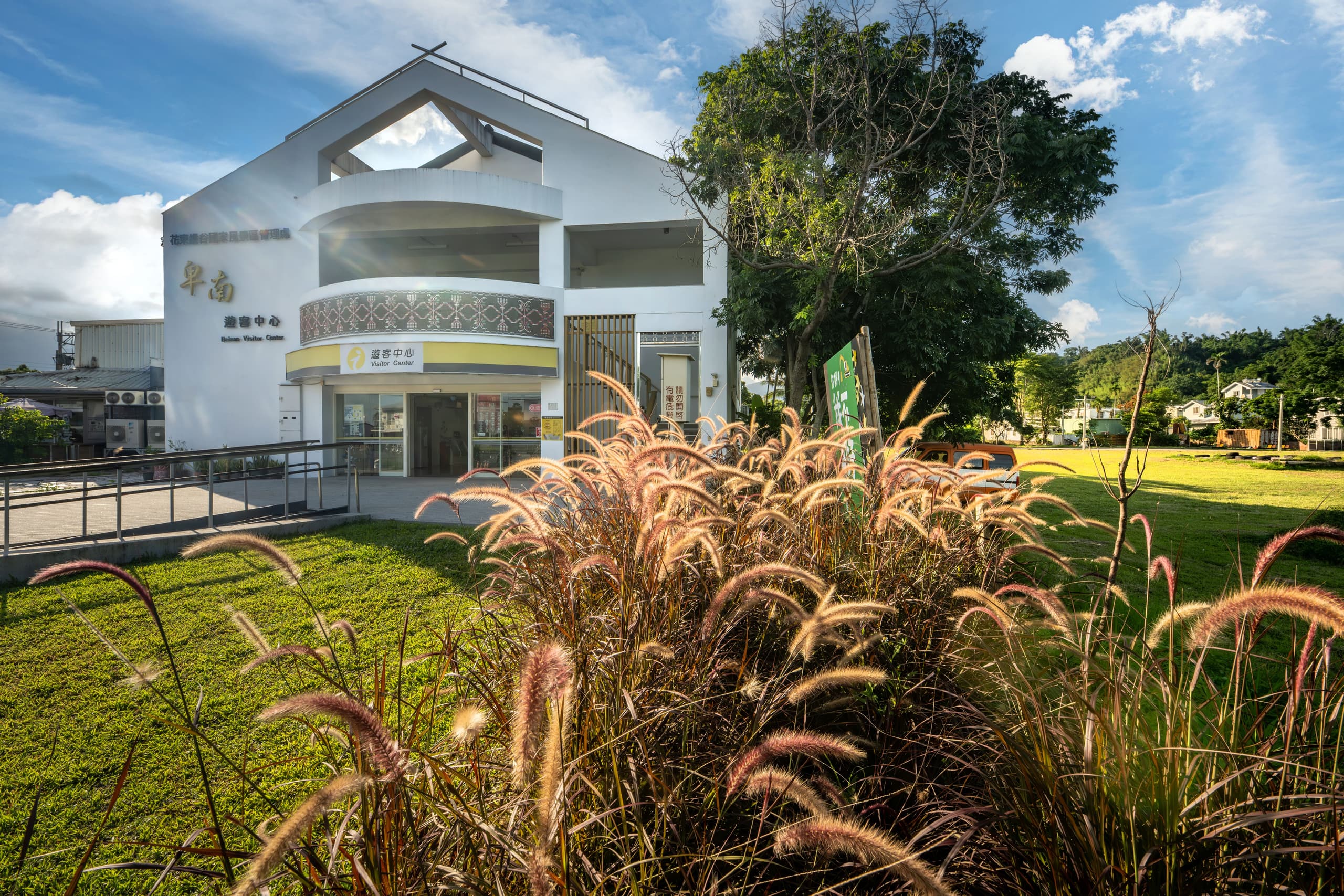
The Beinan Site, beside Kangle Station in Taitung City, is the largest prehistoric settlement ever found in Taiwan and the largest slate-coffin burial ground anywhere in the Pacific Rim and Southeast Asia. The Beinan Culture, which flourished here from roughly 5,000 to 2,300 years ago, left behind a complete record of dwellings, graves, jade, and pottery. Discovered in 1980 during construction of the South-Link Railway, it was excavated under archaeologists Sung Wen-hsun and Lien Chao-mei, yielding about 1,600 burials, over 99% of them slate coffins. The crescent stone pillars (3,500 years old) are the most striking remains still standing on the surface. For travellers who want to understand that Taitung was not first settled a mere hundred years ago.
2026-05-31 · 6 min read
Brown Avenue · The Version Without the Photo Line · A Story from Chishang
A Tree Named "Tea Offering," Lent for a Decade to a Movie Star
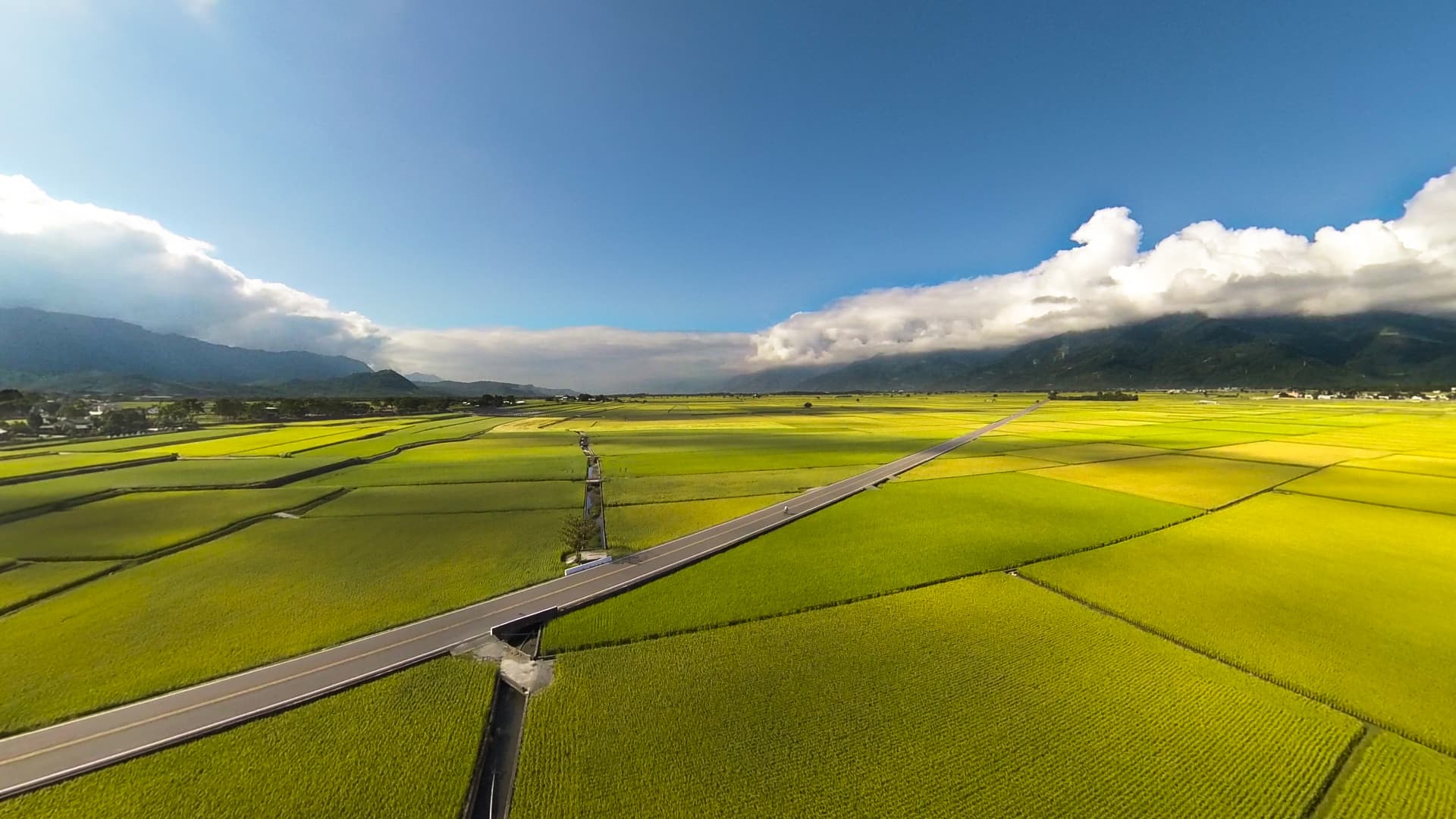
Brown Avenue runs 2.2 kilometres along Jinxin Road No. 3 in Chishang Township, Taitung, deliberately kept clear of power poles and houses. After Takeshi Kaneshiro drank tea beneath its bishopwood tree for an airline commercial in 2013, the road became famous overnight — but since 2023, the official name of the "Takeshi Kaneshiro Tree" has reverted to its original "Tea Offering Tree." As people who live in Taitung, we offer you the truest story of this road — including the tree's real name, how Chishang locals actually ride it, and which season is right.
2026-05-31 · 5 min read