Taitung Travel Guide
What to Eat in Taitung: A Local Food Guide to the Coast, Valley & Tribes
Eating Taitung well has a direction to it. Follow the rhythm of the rift valley, the coast, and the South Link, and you'll taste things that other places simply can't make. We live here, so here's the map we'd hand a friend.
Sam Hu·Updated 2026-06-26 · 9 min read
Let's be honest up front: we're a local team that lives in Taitung and runs our own chartered cars, tours, and a place to stay — and there are links to our own services at the end. But this food map is written the way we'd write it for our own friends. No paid placements, nothing we haven't eaten ourselves, and no promises about any one shop's prices. Taitung's eateries have often been around for years; closing days change, prices change, an owner's mood changes. So this guide is about types and flavors. For exact prices, opening hours, and rest days, check the shop's latest notice.
The hardest thing about eating in Taitung isn't that the food is bad. It's that everything is spread out.
The sights are scattered, and so are the kitchens. A street in the city, a town in the valley, a village on the coast, a hamlet on the South Link — each hides its own flavor. Wander without a plan and you'll waste a tank of fuel, arrive on a closing day, or end up eating the one tourist row. So instead of a list of famous names, here's a map of how to eat Taitung. Follow the rhythm of the valley, the coast, and the South Link, and the good flavors surface on their own.
One idea first: Taitung's flavor is half mountain, half sea
Taitung sits with the Central Mountain Range on one side and the Pacific on the other. Its food is born with two base colors.
- The sea half: the day's catch off Chenggong fishing port, tribal cooking along the Donghe coast, whole squid and billfish simmered fresh.
- The mountain half: rice from the valley, millet from the tribes, prickly-ash and mountain-pepper foraged on the slopes, fish from the rivers.
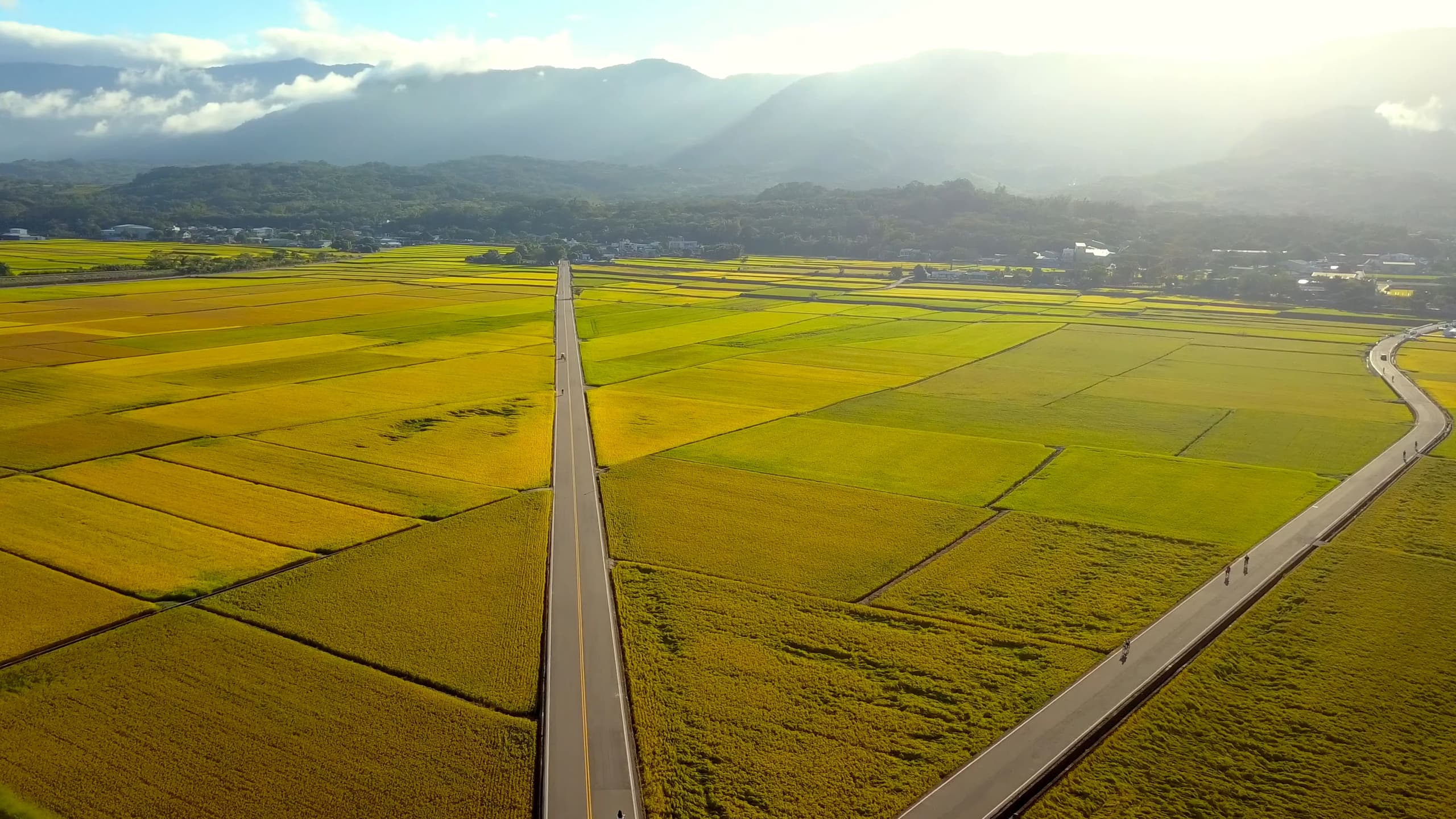
Between the two runs the East Rift Valley, carpeted in rice paddies, which raises Chishang's rice and Luye's tea.
Stack those layers and you have the Taitung table. We'll walk through it region by region.
Region 1 — Taitung City: the home of street food
If you only have half a day in the city, don't rush off hunting "famous" shops. Save your stomach for these types first.
| Type | What it tastes like |
|---|---|
| Rice-noodle soup (mi-tai-mu / 米苔目) | The soul of Taitung breakfast and late-night eating. Thick, soft white rice noodles in a clear, lightly sweet bonito broth, scattered with fried shallot. Hot or iced. One bowl and your stomach wakes up. |
| Steamed buns | Soft skin, an honest filling — grab a few as a snack for the road. There's often a queue, and they come out in batches. |
| Filled glutinous rice balls (tangyuan) | An old-Taitung kind of sweet. Stuffed rice balls in a ginger or peanut soup; warming in winter, good over shaved ice in summer. |
| The fried-snack stalls | A small Taitung ritual. Chicken, green beans, and tempura fried to order in the evening — queuing is normal. |
| Sweet-potato crisps | Sweet potatoes grown in Taitung's red earth, cut into strips and fried golden. A snack or a souvenir that keeps. |
There's also a night market in the city worth a slow lap when one is on — the same street food, plus grilled skewers, drinks, and a bit of bustle. Where it sets up and on which evenings shifts around, so check the latest official announcement before you build an evening around it.
Two local habits worth borrowing: follow the queue the locals are in, and don't fixate on one shop. A lot of Taitung street food works on the principle that three shops on the same street are all good — you eat at whichever is open today. Strike out at one, turn the corner, and there's usually a happy surprise.
The steam off that morning bowl of rice-noodle soup, the smell of oil from the fried-snack stall at eight in the evening — those are the two ends of a Taitung day, and they're the ones you remember.
Region 2 — The rift valley (Chishang · Guanshan · Luye): rice, tea, coffee, slow
Head north into the valley and the air changes — mountains on both sides, an open sea of rice paddies in between. The flavors here are rice, tea, and coffee — the three things that ask you to sit down properly.
The Chishang lunchbox: a meal with a place behind it
The Chishang lunchbox isn't a brand. It's a lunchbox culture a place grew into, and its whole confidence rests on one thing: it's built on rice grown in Chishang itself.
A proper one usually comes in a thin wooden box, with the rice as the lead — each grain distinct, still fragrant once it's cooled. The sides are home-style: a piece of braised meat, a slice of fried egg, braised dried tofu, pickled greens, a few vegetables. No fancy plating, just rice done right.
Our advice: eat the Chishang lunchbox in Chishang. Eating it beside those rice waves, in the smell of rice just milled, is a different thing from microwaving one back at the hotel. If you want to feel how much that field of paddy has to say, read our Chishang: a whole field of breathing rice.
Luye red oolong: a cup only Taitung makes
Red oolong was developed in Luye, here in Taitung — an oolong oxidized toward the depth of a black tea. The liquor is amber-red, smooth and gently sweet on the finish, good hot or cold. It's a tea only Taitung makes, and it travels home well as a souvenir.
If your afternoon needs a place to slow down, sitting up on the highland with a cup of red oolong in the tea-scented air, watching a paraglider trace across the sky, is the valley's other kind of speed. We wrote about that here: A red-oolong afternoon in Luye.
Taitung coffee: an underrated growing region
Most people don't know Taitung grows coffee. Small farms along the Coastal Mountain Range and through the valley produce clean specialty beans. In Luye and in Taitung City, more and more cafés roast their own — worth sitting down for a cup. If you're buying beans as a gift, look for clear origin labeling.
This valley stretch suits a chartered car taken slowly — Chishang, Luye, and Guanshan all sit a fair distance apart, buses are infrequent, and self-arranged driving easily runs you into timing trouble. For how to plan the route and pick a vehicle, see our complete guide to chartered cars in Taitung.
Region 3 — The East Coast (Chenggong · Donghe): the sea, and a tribal sweetness
Follow Provincial Highway 11 north and the sea runs along your left the whole way. The flavor of this stretch comes down to one word: fresh.
- Chenggong's seafood: Chenggong is one of Taitung's important fishing ports. The day's fish, fresh-cooked squid, billfish dishes — it all depends on what comes into port that morning. The one rule for eating seafood here is simple: go with the season, go with the day. Don't demand the hard-to-get thing. Chenggong's billfish in particular has a season; we wrote about it in Chenggong and the billfish season.
- Donghe's millet doughnut: the area around Donghe is known for a doughnut made with millet — crisp outside, with a chewy bounce. Just right as a snack for the road.
- Tribal cooking: Amis villages are dotted along the coast, where you'll find home-style dishes seasoned with sea greens, wild vegetables, and dried fish — the flavor of where the mountain meets the sea.
A heads-up on this stretch: the Jialulan Recreation Area is closed for renovation (expected through 2026/12/31), so leave it off your list for now. And the eight-arch bridge at Sanxiantai is closed for renovation from mid-2026 into late 2027 — it isn't walkable, so view it from the mainland shore only. To see the coast and find a bite, head to the parts of Donghe and the shore that are still open.
A word at the table, because it matters: the flying fish (飛魚) belongs to the Tao (Yami) people of Orchid Island (蘭嶼), an offshore island — not to mainland Taitung. You may see dried flying fish appear in coastal kitchens here, but its home, its season, and its rituals belong to that island. We name it carefully out of respect, and you can too.
Region 4 — The South Link (Taimali and inland): where Indigenous ingredients run deepest
Head south into the South Link and you reach the most concentrated stretch of Indigenous food in Taitung — Paiwan and Rukai communities who use what the mountains give to the fullest.
Around Taimali you'll meet day lily (a common local cooking ingredient), roselle, and custard apple turned into preserves and products. On the tribal table, it's the realm of millet, sweet potato, grilled meats, and wild vegetables.
Taimali at dawn hides Taitung's other way of "eating" — waiting at the shore for the first light, watching how the sky lifts the sea into color. Whether you actually catch the sunrise is up to the weather, per Taiwan's Central Weather Administration — summer afternoons here often bring thunderstorms, and July through September is typhoon season. Don't treat any sky as a guarantee. While you wait by the water, stay clear of the tetrapods and watch for sneaker waves; have one adult keep an eye on each child, and don't go in during rain, thunder, or a typhoon. But even if the clouds sit thick and the big view never comes, the dawn wind and a hot bowl of soup mean the trip wasn't wasted.
A little cheat sheet for "eating Taitung well"
Walk into an Indigenous-flavor meal and these words keep turning up on the menu. Learn them and ordering stops being a guessing game.
| Ingredient | What it is |
|---|---|
| Millet (小米) | The staple memory of the tribes. Made into millet rice, millet mochi, and millet wine — faintly sweet, with a chew. |
| Prickly-ash (刺蔥) | A thorny aromatic herb, fresh and lightly pungent. It goes into soups, fried eggs, and tempura — a signature scent of tribal cooking. |
| Mountain-pepper (maqaw / 馬告) | The Indigenous "pepper," with an aroma of lemon braided into peppercorn. Used in chicken soup and to cure meat; one taste and you know you're in Taitung. |
| Custard apple (釋迦) | Taitung's signature fruit — creamy, very sweet, eaten fresh with a spoon. It's seasonal, so fresh fruit and shipping depend on the time of year; check the shop's latest notice. |
Those flavors are a fair miniature of Taitung's mountain-and-sea table. When you order, it's worth asking the owner outright: what do you have today made with prickly-ash or mountain-pepper? You'll often turn up something good that never made it onto the menu.
How to fit this map into your trip
A practical way to eat it, so you don't come up empty:
- Land on day one and eat in the city: rice-noodle soup, steamed buns, fried snacks. Warm the stomach up.
- Give the valley a whole day: eat the Chishang lunchbox in Chishang, drink red oolong with a coffee in Luye, paddies in between. This is the stretch that most needs slowness.
- Read the coast on the day: take Chenggong's seafood as the season and the day give it — don't demand a particular fish — and grab a millet doughnut in Donghe for dessert.
- Eat tribal on the South Link: find one Indigenous-flavor meal and meet millet, prickly-ash, and mountain-pepper all at once.
Most shops here cook to order, take rest days, and run queues, so keep some slack and don't over-pack the day. Strike out at one place, move to the next — that's simply how Taitung is eaten.
Honest disclosure
Once more, plainly: we're a local team that lives in Taitung, runs our own chartered cars and tours, and operates our own place to stay. The links at the end are to our own services, and we label them as such. But for this map we took no money from any shop and wrote about nothing we haven't eaten. It's about types and flavors — exact prices, hours, rest days, and whether a place offers vegetarian food are always best confirmed with the shop on the day. Taitung is worth tasting with your own mouth, not ticking off a list.
If you want to thread these flavors into a single trip without driving the mountain roads, hunting for parking, or chasing bus schedules yourself, we can line up the car and the route for you — see our chartered-car guide. Save the energy you'd spend finding the way and put it toward eating; that's the pace Taitung is meant to have. If you'd like a place to stay sorted into the same plan, just tell us before you set off — you can find our rooms at our stay page.
Next —
Turn this guide into a real trip?
Leave the car, the stay, the meals and the local guide to people who live in Taitung.
Tell us on LINE the version you want and we'll lay it out for you.
A rough plan & quote the same day · no charge unless you're happy · no hard sell
See our journeys first →