Taitung Travel Guide
Best Time to Visit Taitung: A Season-by-Season Guide (Weather, Balloons & Crowds)
We live in Taitung and run our own cars, tours and stay — so here's the honest month-by-month picture: when the rice is green and when it's gold, when the balloons fly, when the typhoons come, and which weeks are quiet.
Sam Hu·Updated 2026-09-07 · 10 min read
We live in Taitung, and we run our own chartered cars, small-group tours and a place to stay here. So when a friend asks us "when should I come?", we don't reach for a generic climate chart — we think about what the valley actually looks like that month, whether the sky is likely to behave, and whether we'll be able to find them a room.
That's what this guide is: a season-by-season walk through the Taitung year, written the way we'd talk you through it over coffee. The short version is that there's no bad time to come — but each season trades something for something else, and knowing the trade-offs is how you end up with the trip you actually wanted.
An honest note before we start: we're a local operator, not a review site pretending to be tourists. There are links to our own tours, chartered car and stay at the end. Everything here is written the way we'd tell a friend — no paid placements, nothing we haven't done ourselves, and where we're not sure of a price or an opening time, we say "check the latest official announcement" instead of making it up.
The one caveat that shapes everything
Before the seasons, the single most important thing to understand about Taitung: the sky owes you nothing, and that's true in every month.
Sunrises, clear night skies and balloon launches are never guaranteed. Taitung's typhoon season runs roughly July through September, and even outside it, summer afternoons bring frequent thunderstorms; balloon launches are cancelled in poor weather, per Taiwan's Central Weather Administration. We say this up front so you'll plan with a little slack and a soft grip on expectations.
Here's the thing we tell every guest, though: come anyway. If you build a trip around one perfect sunrise photo, the weather can ruin it. If you build a trip around slow mornings by this coast and long lunches in the valley, the weather almost never can. Even when the headline moment doesn't happen, the trip won't be wasted.
With that said, let's walk through the year.
Spring (March–May): green rice, steady skies, room to breathe
If you want our quiet favourite for a first visit, it's spring.
The valley is at its most photogenic green. The young rice has gone in around Chishang and Guanshan, and on a still morning the flooded paddies turn into mirrors — the Coastal Range doubled in the water, the avenues running dead straight toward the mountains. This is the lush, postcard version of the Rift Valley, and it's a different picture from the gold most people imagine.
The weather is about as kind as Taitung gets: warm but not yet sticky, mostly stable, well before the typhoon season. Days are long enough for an early start and a late dinner without feeling rushed.
And the crowds are thin. Spring sits before the big summer wave, so weekdays in particular feel like you've got the place half to yourself — easier bookings, gentler rates, more room on the rice lanes. If your ideal Taitung is green, calm and uncrowded, this is your window. For where to point the days, our things-to-do guide lays out the coast, valley and mountains by region.
Spring in one line: the safe, beautiful all-rounder — green rice, stable skies, few crowds. The trade-off is no balloons.
Summer (June–August): the balloons — and the storms
Summer is Taitung's headline season, and it's a genuine trade: the most spectacular thing the region does, wrapped around its least reliable weather.
The balloons
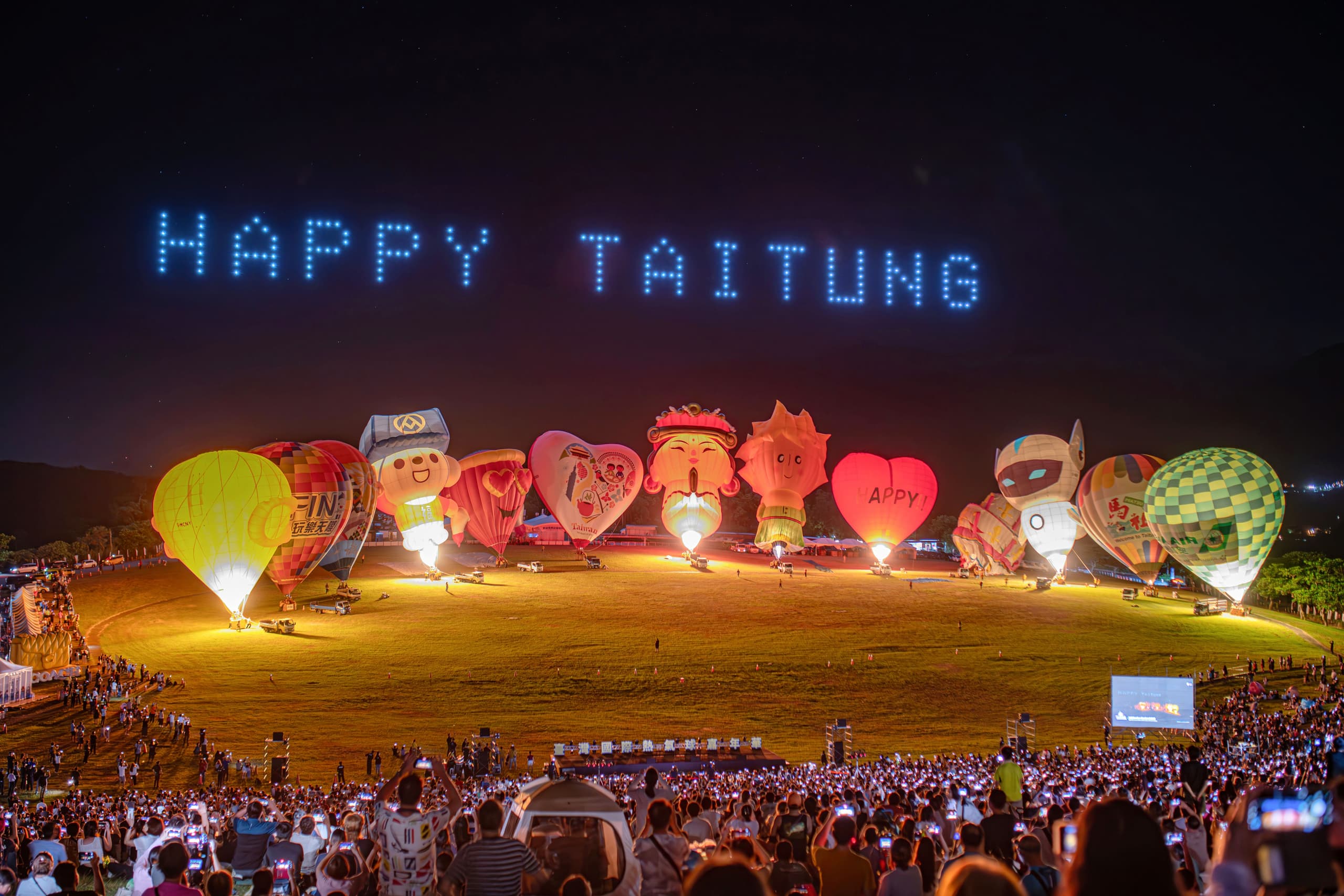
The 2026 season has ended. The Taiwan International Balloon Festival ran Jul 4 – Aug 20, 2026 at Luye Highland, and the balloons came down after the closing Night Glow on the evening of Aug 20. Drive up to the highland now and you get a quiet grass slope with the wind coming up the valley — lovely in its own way, but not what you'd fly in for.
It runs again next summer. In past years it has opened in early July and closed mid-to-late August, with the site closed on Tuesdays and only two windows a day — roughly 05:30–07:00 and 17:00–18:30, nothing on the field in between. The official 2027 dates are not out yet; they normally only appear in spring, so treat any exact date quoted to you now as a guess. What we'd do if you're planning around it: hold early July to mid-August for flights and rooms, and firm it up when the announcement lands.
From the 2026 season, so you know what you'd be planning for:
- The Chiikawa collaboration balloons were a ground display only — they don't carry passengers, so don't plan a ride on them.
- Tethered rides (the balloon stays roped to the ground and lifts you a short way up) ran roughly NT$550 on weekdays and NT$650 at weekends.
- So-called "free flights" — the ones that actually drift across the valley — are run year-round by a private Luye operator, not an official festival item, and start around NT$9,000+. Those don't stop when the festival does.
- Every launch depends on the weather and is cancelled in poor conditions. Always check the latest official announcement before you set the alarm.
We've written a full, separate walk-through if you're building a trip around this — see our Taitung balloon 2026 guide for how the season actually works and how to catch a launch.
The catch: weather and crowds
Summer is also typhoon season (roughly July–September) and the season of afternoon thunderstorms. A direct typhoon can close things down for a day or two, and even a normal summer day often means blue mornings giving way to towering clouds by mid-afternoon. This is exactly why the balloon mornings are scheduled at dawn — that's the calm window.
It's the busiest time of year, too. During the festival and on summer weekends and holidays, rooms and chartered cars fill up weeks ahead, and rates are at their peak. If summer is your window, book early — this is the one season where leaving it late genuinely costs you.
Two more summer notes worth keeping:
- This is when Taitung's signature fruit, the custard apple (釋迦, sugar apple), and the golden day-lily / golden-needle flowers come into their own — the day-lily hillsides peak in late summer into early autumn. Custard-apple availability and fresh shipping depend on the season, so ask locally for what's ripe.
- If you're travelling in the heat, mind the water: keep clear of tetrapods and sneaker waves, stay out of the sea in rain, thunder or after a typhoon, and watch children one-on-one near any water.
Summer in one line: the only time for balloons and long warm days — but typhoons, storms, peak crowds and peak prices. Book early and stay flexible.
Autumn (September–November): the sweet spot
If you asked us to bet on the single best stretch of the Taitung year, we'd put our money on autumn — and on October in particular.
By October the typhoon risk has usually eased, the air loses its summer stickiness, and the light turns clear and golden in a way that flatters everything. It's warm enough for the coast, comfortable enough for long valley days, and stable enough that you can actually plan a sunrise without crossing your fingers quite so hard.
It's also the season of the golden rice harvest. The valley that was mirror-green in spring turns to ripe gold, and a second flush often lands around late October into November, with the avenues at Chishang glowing under the mountains. (Exact timing moves year to year with the weather and the planting cycle — treat it as a window and check locally before a long drive.)
And the crowds have gone home. The festival wave has passed, the summer holidays are over, and weekdays feel unhurried again — yet the weather is often better than it was in peak season. Better skies, gold rice, fewer people: that's why we call it the sweet spot. If you want a ready-made backbone for these days, our 3-day, 2-night itinerary sits right inside this window.
Autumn in one line: the best balance of the year — settling weather, golden harvest, thinning crowds. The trade-off is no balloons.
Winter (December–February): cool, quiet, and made for hot springs
Winter is Taitung's secret season — and the one locals quietly love.
The southeast corner of Taiwan stays comparatively mild through winter; days are cool and often dry, with the clearest, most settled skies of the year on the good ones. It rarely gets truly cold here the way the north does. What it does get is quiet — this is the least crowded stretch of the whole year, with the easiest bookings and the gentlest rates you'll find.
Cool, dry weather is also exactly what makes a hot spring perfect, and Taitung has two well-known areas. Zhiben (知本), south of Taitung City, is the classic hot-spring valley — read our Zhiben hot spring story for the feel of it. Our own partner stay, Luminous Hot Spring Resort (鹿鳴溫泉酒店), sits on 11.3 hectares up in Luye Township in the Rift Valley, near Luye Highland — a different setting entirely, with the valley and the tea hills around it.
Winter is a fine time to lean into the slow, indoor pleasures of Taitung, too: Luye red oolong (紅烏龍) by a window, a long Chishang lunchbox, a pour-over of Taitung specialty coffee while the rain passes. The rice fields are between seasons and the balloons are months away — but if your idea of a good trip is a quiet valley, a warm pool and nowhere to be, this is your time.
Winter in one line: the quietest, calmest season — cool dry days, hot springs, lowest rates. The trade-off is no balloons and resting rice fields.
Quick comparison
| Season | Months | What's in season | Weather | Crowds | Balloons |
|---|---|---|---|---|---|
| Spring | Mar–May | Mirror-green rice paddies | Warm, stable, dry-ish | Low | No |
| Summer | Jun–Aug | Custard apple, day-lily (late summer), the balloons | Hot; typhoon season + afternoon storms | Highest | Usually early Jul – mid-Aug (2026: Jul 4–Aug 20, now ended) |
| Autumn | Sep–Nov | Golden rice harvest | Settling, clear, comfortable | Low–medium | No |
| Winter | Dec–Feb | Hot springs, red oolong, Chishang rice | Cool, dry, mild | Lowest | No |
A reminder on the right-hand column: rice timing, fruit availability and balloon launches all depend on the weather and the season, so treat the table as a guide, not a guarantee — and check the latest official announcements for anything time-sensitive.
So, when should you come?
Strip it all back and it's a short decision:
- You want the balloons: high summer at Luye Highland — early July to mid-August in most years. The 2026 season (Jul 4–Aug 20) has ended and 2027 dates land in spring. Mind the typhoon season, and book early.
- You want green rice and easy skies: spring (Mar–May).
- You want the best all-round balance — gold rice, good weather, few people: autumn, and October above all.
- You want quiet and hot springs: winter (Dec–Feb).
Whichever you choose, the same trip philosophy holds: plan around the slow pleasures that the weather can't cancel, and treat the sunrise or the balloon launch as a bonus rather than the point. Taitung rewards that mindset in every month of the year. If you're still mapping the bigger picture, our Taitung travel guide ties the regions, transport and timing together.
How we can help
We're a local team based here, so we're not pointing you at someone else's services — these are our own:
- Where to stay: see our stay page for the hot-spring resort and how it fits into a Rift Valley trip.
- Getting around: Taitung's public transport is sparse, and most visitors rent a car or use a chartered car with a driver — which is what makes pre-dawn balloon and sunrise runs realistic without driving unfamiliar roads in the dark.
One last honest word: prices, opening hours and festival details change, and the sky does what it wants. We've given you the real shape of the Taitung year as we live it — for anything time-sensitive, check the latest official announcement, pick the season that fits what you want to see, and come slow.
Next —
Turn this guide into a real trip?
Leave the car, the stay, the meals and the local guide to people who live in Taitung.
Tell us on LINE the version you want and we'll lay it out for you.
A rough plan & quote the same day · no charge unless you're happy · no hard sell
See our journeys first →