Taitung Travel Guide
Playing in the Water in Taitung: Waterfalls, Cold Springs, Secret Beaches — Learn the Safety Tiers Before You Get In
"Going to play in the water" covers a huge range. At some spots you can wade with a five-year-old in hand; at others, a single afternoon thunderstorm you never even see upstream can turn deadly. Sort the spots into tiers first, then decide where to go.
Sam Hu·Updated 2026-06-26 · 9 min read
Every year the moment June arrives, the same question starts landing in our inbox: "We're heading to Taitung this summer — where can we go to play in the water?"
We'd love to just hand you a private little list of spots. But after living here long enough, we've seen too much in the news — streams surging and trapping people on boulders, a single wave at the beach dragging someone out, a child vanishing in the few minutes an adult looked down at a phone. So for this article we decided to write it differently.
Safety tiers first, then where to go.
Because the two words "play in the water" hide things that are wildly different from one another. At some spots you can happily wade with a five-year-old; at others, an afternoon thunderstorm you can't even see — happening somewhere upstream — can turn a gentle stream into a man-eating torrent within ten minutes. Lumping those two together is the most dangerous thing you can do in a Taitung summer.
Let's be upfront: we really do live in Taitung, and we run our own chartered-car service and tours — there are links to our own offerings at the end. But the safety rules below, we wrote as if our own family were about to go play in the water. Not a single line is filler.
Before You Get In, Burn These Three Rules Into Your Memory
Whatever tier of water you end up choosing, remember these three first. They aren't meant to scare you — they're what Taitung reminds everyone of, with real accidents, every single year.
Rule one: the moment the sky or the upstream changes, get out of the water immediately. The scariest thing by a stream isn't the sun over your head — it's the upstream you can't see. It can be sunny where you are while it's pouring on the other side of the mountain. The warning signs are simple: you start to hear thunder, the water suddenly turns muddy, the level quietly rises, the sound of the current grows louder and faster, or dead branches and leaves start drifting down from upstream. If even one of these happens, don't hesitate — get everyone out of the watercourse and head for higher ground right away. A stream surge is measured in minutes; by the time you're sure, it's usually already too late.
Rule two: at the beach, stay away from tetrapods and breakwaters, watch for freak waves, and never turn your back on the sea. Taitung's coast is beautiful, but the East Coast faces the open Pacific, and the waves carry more force than you'd expect. Tetrapods (the concrete "rice-dumpling" blocks) are coated in slippery algae, and the gaps between blocks can pin a person and drop them into a deep crevice they can't climb out of — don't climb onto them for a photo. A freak wave is a single large wave that arrives without warning, surging up out of a sea that looks calm and dragging people out. So at the shore, always face the sea, stay alert, and keep children right beside you.
Rule three: when there's a typhoon, thunderstorm, or high-surf advisory, stay away from the water all day. July through September is typhoon season in Taitung, with frequent afternoon thunderstorms. Whenever the Central Weather Administration issues a typhoon warning, a heavy-rain advisory, or a long-wave (freak-wave) alert, take water activities out of the plan for that day and go soak in a hot spring, drink tea, or visit somewhere indoors. The sea and the streams will always be there — come back tomorrow. The thing that matters most is that everyone is fine.
A life jacket is not decoration — it's your last line of insurance for staying afloat. Even strong swimmers wear one, because cramps, hidden currents, and getting hit by a wave don't care how well you swim. Put it on and buckle it before you get in.
Tier One — Open to Everyone: Managed, Easy-to-Reach Water
What this tier has in common: it's managed, the water is calm, you can see the bottom, and it's easy to get out. Perfect for first-time visitors, families with kids, those bringing older relatives, or anyone who just wants to cool off.
Water-Therapy Zones and Kids' Pools at Hot-Spring Resorts
The most reassuring choice is often the pool right where you're staying. It's managed, the water depths are marked, the temperature is steady, and the surfaces are non-slip — the kids play in the shallow pool while the adults soak nearby, and nobody has to keep their heart in their throat. Taitung's hot-spring belt runs all the way from Zhiben down the South Link route, and plenty of resorts keep their water zones open in summer too (hot springs aren't just a winter thing). The Luminous Hot Spring Resort we work with — located in Luye — has a spacious open-air water area with plenty of room for kids to burn off energy, which is exactly why it's our go-to recommendation for families coming for the first time who'd rather not bake in the sun or wear themselves out.
Managed Shallow Streamsides and Wading Areas
Taitung's Rift Valley and coast have a few tidied-up, gentle-flowing streamside shallows where the water only comes up to your calves, your feet touch bottom, and you can see the stones. These are good for wading, poking around for pebbles, and picnicking on the bank. The key point: however gentle it looks, rule one still applies in full — if it starts to rain, you hear thunder, or the water turns muddy, get out right away.
A note from us locals: a lot of those photogenic "secret wild stream" check-in shots look serene and timeless — but that's a single moment, on a sunny day, at low water, with someone there to help. The photo won't tell you what the same spot looks like after heavy rain. Don't load the whole family into the car and rush off based on one picture.
Tier Two — Do Your Homework, Watch the Weather: Wild Streams and Open Beaches
This tier is where it stops being "park and play." It includes ordinary wild-stream pools and unguarded beach swimming. Whether you can go, and whether it suits you, depends on that day's weather, the water conditions, and whether the people with you have experience.
A few principles:
- First, choose water that's managed, has marked depths, and ideally has lifeguards. Where there's no lifeguard, you and your companions are each other's only lifeguards — only go if you can carry that responsibility.
- Never go alone. At least two people, always within sight of each other.
- Watch for ten minutes before getting in: the direction of the current, any spots that suddenly drop off into deep water, and the sky upstream.
- Know your limits — don't push out into the deep, and don't let companions egg you on.
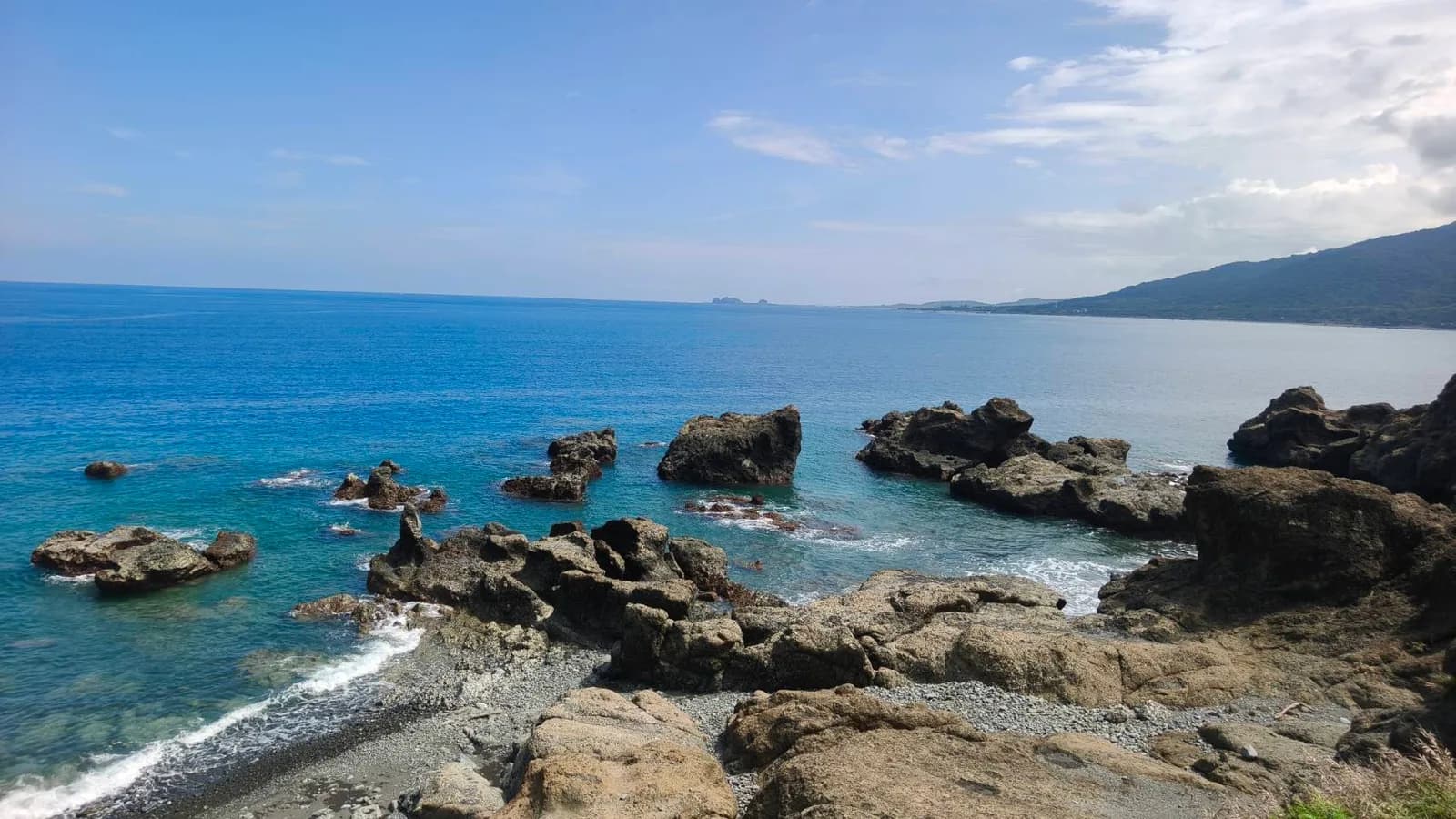
For the beach: Taitung has plenty of beautiful bays and reef coastlines, and watching the waves from a distance or wandering the tidal flats is lovely. But swimming offshore, jumping in, and playing in the surf are advanced — you need to understand currents, read waves, and ideally have a local with you. One more thing: the Jialulan Recreation Area on the East Coast is currently closed for renovation (expected through the end of 2026), so leave it off the list for now.
Tier Three — A Professional Guide Is Mandatory: Lisong Hot Spring and High-Mountain Wild Streams
For this tier, we'll say it straight up front: without a licensed guide, please do not go on your own.
Lisong Hot Spring: Taiwan's Most Beautiful Wild-Stream Hot Spring — and the One You Can Least Afford to Underestimate
Many people call Lisong the most beautiful wild-stream hot spring in all of Taiwan — green-blue rock walls hung with mineral crystals, hot spring water trickling down the stone face into the cold stream. It's a sight you'll remember for life. But to get there, you have to river-trek and scramble down a stretch of slippery, steep giant boulders, then climb back up on the way out, with no smooth trail the entire way.
The most dangerous part is the water. The stream Lisong sits on can surge in a very short time when it rains upstream, turning a gentle valley into a torrent that traps people. Every year visitors get trapped, injured, and even lose their lives there. So —
- always go with an experienced, licensed guide and never alone;
- check the weather carefully before setting out, and cancel decisively if there's rain upstream or unstable conditions;
- understand that this is not a flip-flops-and-a-toddler stroll — it's a river-trekking trip that demands fitness and proper gear.
If you'd like to "walk" it in words first and get a clear sense of both its beauty and its difficulty, read our Lisong Hot Spring story before deciding whether to put it on your list.
While We're At It: Jiaming Lake and the Alangyi Trail Are Not Places to Play in the Water
People often ask about these two names alongside "cooling off in summer," so let's be clear:
- Jiaming Lake is a high-mountain alpine lake — a serious trek that requires mountain-entry and park-entry permits and a real fitness threshold. You cannot swim there, it's not a cool-off route, and it's an overnight mountaineering trip you have to train for.
- The Alangyi Ancient Trail is one of the last stretches of pristine coastline left in Taiwan, walked along a gravel-beach path that requires an advance permit and strongly recommends a guide. It's not a place to swim either.
Both are well worth doing — but prepare for them at the standard of a proper mountaineering or ancient-trail expedition, and don't mix them up with "finding a spot to soak in."
How to Fit Water Time Into Your Itinerary Without Baking or Rushing
Taitung's spots are spread out — the waterfall is on this stream, the cold spring in that township, the beach in yet another direction. The biggest mistake when playing in the water in summer is driving between spots under the blazing noon sun: the adults are exhausted, the kids get fussy, and in the end nobody's happy.
Here's the rhythm we use when we're taking guests around: put water time in the early morning or toward dusk (cooler, fewer people, and the light is prettier), and retreat to the resort at midday to soak, nap, and eat, avoiding the hottest, most heatstroke-prone hours. And if an afternoon thunderstorm rolls in — very common in a Taitung summer — just shift that day's water plans indoors or to a hot spring, no forcing it.
If you'd rather not research road and water conditions yourself, and you'd like someone to keep an eye on the weather and adjust the route on the fly, a chartered car is the most stress-free way to play in the water in summer. The driver knows which stretch of stream is in what condition today, where there's shaded parking, and which hours stay out of the sun — and the itinerary can flex with the weather. For how to choose one and how the pricing works, we've put it all together in our Taitung chartered-car guide so you can see clearly before you decide.
Finally, In All Honesty
We're a local team that lives in Taitung and runs our own chartered-car service and tours, and yes, there are links to our own lodging and chartered car at the end of this article — we won't hide that.
But from start to finish, the thing we most want you to take away isn't a particular secret spot — it's this: learn the tiers first, then decide whether to get in. Taitung's water really is beautiful — beautiful enough to be worth doing your homework, checking the weather, choosing the right spot, and bringing the right people.
You have fun because you made it home safe. Please don't reverse that order.
Next —
Turn this guide into a real trip?
Leave the car, the stay, the meals and the local guide to people who live in Taitung.
Tell us on LINE the version you want and we'll lay it out for you.
A rough plan & quote the same day · no charge unless you're happy · no hard sell
See our journeys first →