Taitung Travel Guide
Stargazing in Taitung: When You Can See the Milky Way, Where to Go, and How to Prep (the Honest Version)
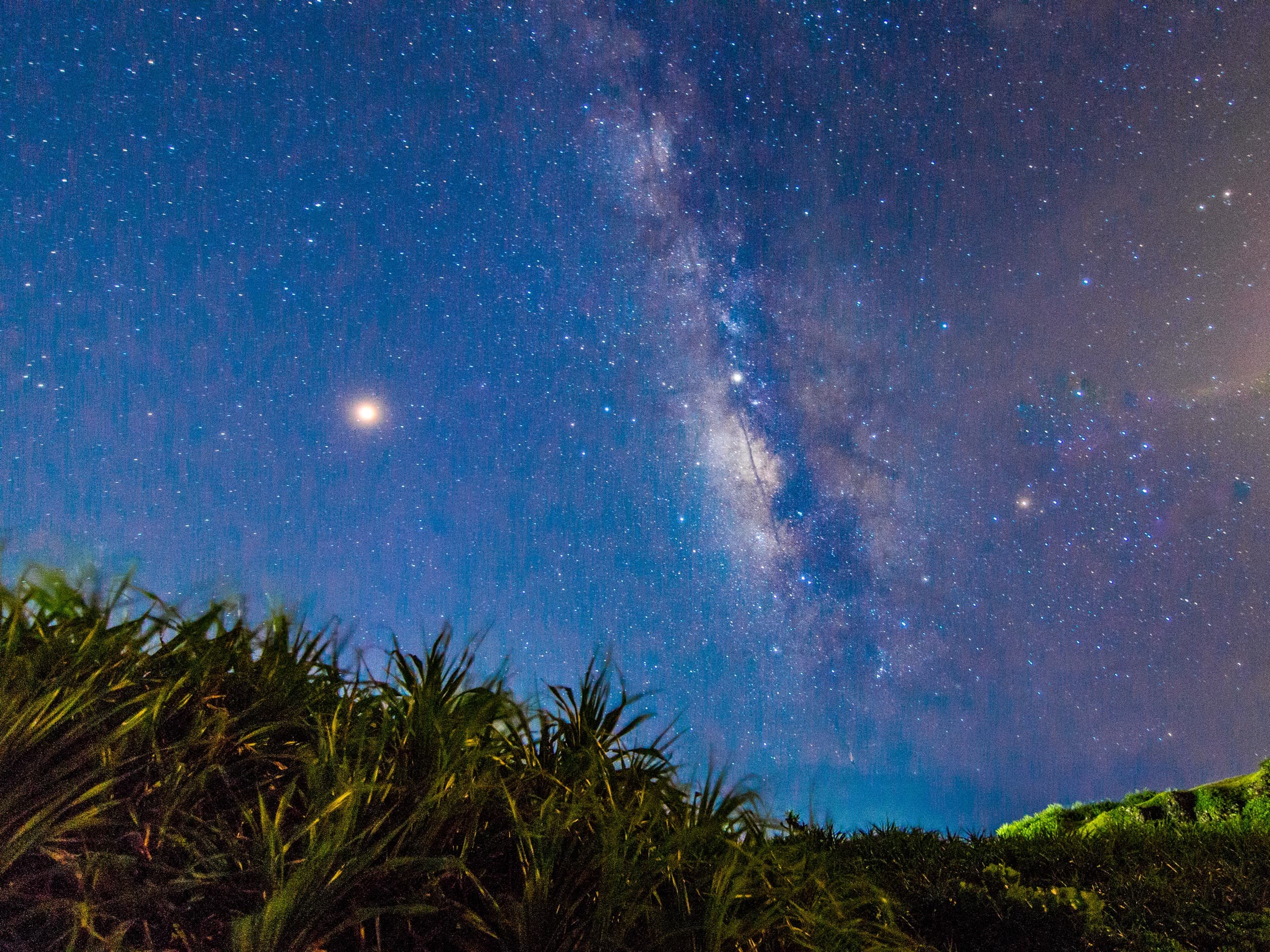
On summer nights in Taitung, the Milky Way climbs slowly up from behind the ridgelines to the south — but clouds and the moon are the real bosses. Written from the perspective of people who actually live here, this guide lays out season, moon phase, location, staying warm, and safety all at once. No promises, but you won't come away empty-handed.
Sam Hu·Updated 2026-06-26 · 9 min read
We're a local team that lives in Taitung and runs our own chartered-car trips and itineraries. Let's get one thing out of the way first: when it comes to the night sky, no one can make you any promises. Once the clouds roll in or the moon brightens, even the best guide in the world is useless.
But whether you see the stars is a matter of weather, and whether you've prepared properly is something we can help with. This guide lays out season, moon phase, location, warmth, and safety clearly — follow it, and on the night you get good weather, the Milky Way will be right over your head instead of slipping past you.
At the end you'll find links to our own lodging and trips. But every line below is written as if a family member of ours were going stargazing. No filler.
First, the most important thing: the Milky Way is seasonal
A lot of people assume the night sky looks the same all year round. It doesn't.
The thing everyone pictures — that thick band, like spilled milk, with a dark lane running through the middle — is the galactic core (toward Sagittarius). It only climbs into Taiwan's night sky during certain seasons: roughly May through September, which is Taiwan's summer. That's the best time to see the summer Milky Way.
- May and June: the galactic core only rises high in the second half of the night, close to dawn — good for night owls and early risers.
- July and August: late at night, the Milky Way hangs high in the southern sky, at its easiest to spot and most spectacular — but this is also Taitung's typhoon season, with frequent afternoon thunderstorms, so it's the most unpredictable stretch.
- September: the Milky Way appears in the southwestern sky not long after dark, making the timing easier to catch, and the weather starts to settle a little.
Winter in Taitung isn't starless — the winter sky around Orion is beautiful too — you just can't see that densest galactic core. So if your goal is "I want to see the Milky Way," treat it as a May-to-September thing.
One line to remember: In summer, in the second half of the night, look toward the mountains to the south.
The moon is the invisible streetlamp
Plenty of people nail the season and pick a great spot, only to arrive and find the Milky Way so faint it's barely there. The usual culprit is the moon.
A full-moon sky glows like someone switched on a natural streetlamp, washing out most of the Milky Way. So there's a simple rule for picking your night:
- Avoid the few days around a full moon. Aim for the end of the lunar month into the start of the next one (around the new moon) — when the moon is thin and sets early, or doesn't show up at all.
- Can't read the lunar calendar? No problem. Most phone moon-phase apps and weather apps label moonrise/moonset times and the moon phase. The goal is: during your stargazing window, there's no big moon in the sky.
Season sorted, moon avoided — that leaves one last gate, and the most uncontrollable one: clouds.
Where to go: from beginner to advanced
Picking a spot comes down to three principles: the farther from city lights, the higher the elevation, and the more open the view. The nice thing about Taitung is that all three are relatively easy to get at once.
Best for beginners: out in the fields of the East Rift Valley
The Rift Valley around Luye, Chishang, and Guanshan is far from city lights and wide open, with a full sweep of sky overhead — the easiest place for newcomers to get started. From an open meadow or the edge of a field, with an unobstructed view to the south, the Milky Way rises from behind the ridgeline between the Central Mountains and the Coastal Mountains.
Hot-air balloons by day, stars by night makes for a very complete summer day in the valley. Luye Highland is the main stage for balloons during daylight, and after dark the grass offers the same wide-open view. To string the daytime plans together, see our complete guide to the 2026 Taitung Hot-Air Balloon Festival. (A heads-up: during the festival, the early mornings draw crowds and temporary parking is banned at the highland, so for stargazing it's best to avoid the launch-time hot spots.)
Going further: the high elevations around Xiangyang and Lidao
Want to take it up a level? Up around Xiangyang and Lidao on the South Cross-Island Highway, the elevation is higher, the light pollution lower, and the air clearer — the Milky Way comes through so sharply it'll take your breath away.
But the trade-offs are real, so please keep these in mind:
- Cold nights: even in summer, the high mountains turn cold deep in the night. Bring plenty of layers — don't head up the mountain in just a T-shirt.
- Mountain driving: the South Cross-Island roads are winding, visibility at night is poor, and fog can roll in. If you don't know the roads, don't force it. Leave it to someone who does, or to our chartered-car host — your only job is to step out and look up.
If you'd rather stay overnight in a mountain village in the valley and give the whole evening over to the stars, take a look at Lidao, a mountain village above the sea of clouds to get a feel for what a night at that elevation is like.
Beginner gear: there's very little, but these few things matter
To enjoy the Milky Way, your naked eyes are enough. You don't need a telescope or an expensive camera. What really decides whether your night is good or bad is a handful of unglamorous items:
| Item | Why it matters |
|---|---|
| Red-light flashlight | A regular white flashlight instantly destroys the night vision you worked to build up. Red light doesn't — use it to find your way and find your things. |
| Warm clothing | The Rift Valley gets cool late at night, and the high mountains get cold. Light jacket, long pants, a hat — better to bring them and not wear them. |
| Picnic mat / folding chair | Stargazing means looking up, and standing makes your neck ache fast. Lie back or lean against something and you'll watch longer and more comfortably. |
| Weather/moon-phase app | Checking cloud cover, moon phase, and moonrise/moonset before you leave is what makes or breaks the trip. |
| Enough water and a hot drink | The second half of the night brings hunger and chill — a cup of something hot from a thermos and you'll thank yourself. |
And one thing you don't need to buy but that's most often overlooked: let your eyes adjust to the dark. Once you're there, put the phone away (or set it to the dimmest red light) and just wait quietly for 15 to 20 minutes. You'll watch a sky that started with only a few stars slowly "grow" a whole field of them. A lot of people miss the Milky Way simply because they gave up too early, or kept scrolling their phone.
If you want to photograph it, that's when you need a camera that can do manual long exposures, plus a tripod. Phone night modes can capture a hint of the Milky Way now, but don't expect it to match the feeling your eyes get.
Honesty time: no one can promise you the night sky
Now for the least romantic but most important part.
Even if you nail the season, dodge the moon, pick a great spot, and pack everything right, you may still see nothing. A single cloud, an afternoon thunderstorm that never fully clears, a night of high humidity — any of these can close the whole sky. That's not a question of how good the guide is; the weather was never ours to control. Taitung's July through September is exactly typhoon season, with frequent afternoon thunderstorms, so it's even more variable.
So here's our honest advice:
- Check the latest cloud-cover forecast from the Central Weather Administration before you go. All sky conditions and weather follow the Administration's official announcements.
- Keep one or two extra star nights as backup — don't pin all your hopes on one night.
- Reframe it as "going for a pre-dawn walk through Taitung." Even if there's no Milky Way that night, you'll still have stood in the empty Rift Valley, heard the insects in the dark, and breathed the clean cold air at high elevation. That, in itself, is not a wasted trip.
We've guided guests who were so moved by a sky full of stars they couldn't speak, and we've guided nights where the clouds never cleared and everyone ended up wrapped in jackets, drinking hot tea and talking. That second kind is actually pretty wonderful too.
Put safety first
Stargazing is romantic, but two things stop being romantic the moment you take them lightly:
- Staying warm: hypothermia doesn't care what season it is. The high mountains get cold deep in a summer night just the same, and the elderly and kids especially need looking after.
- Mountain driving: at night the mountain roads have poor visibility, fog rolls in easily, and there's a risk of falling rocks. If you don't know the roads, please don't push yourself to drive them. Better to choose an open spot in the Rift Valley, or hand the high-elevation stretches to someone who knows the way.
This is exactly why many people choose to leave the driving to us — your only job is to look up; we'll handle the road.
Want to sleep well and still see the stars?
The hardest part of stargazing is that it often happens in the small hours. After watching the sky, the last thing you want is to drive another mountain road back to town.
The lodging we partner with is the Luminous Hot Spring Resort in the Rift Valley — set on 11.3 hectares, with in-room hot-spring soaking, sitting out in the fields of Luye with low light pollution. Watch the stars, take a soak, and collapse straight into bed, then head out the next day well rested. Put "seeing the stars" and "sleeping well" into the same night.
If you'd rather hand the whole trip to someone — playing the valley by day, picking a stargazing spot after dark, getting safely back to a hot-spring room deep in the night — that's exactly what we do. Dates, group size, and the elevation you want all change the itinerary and the price, so let us know and we'll keep an eye on the cloud cover, moon phase, and route for you. All you have to remember is to look up that night.
We can't promise the sky will be clear. But everything you should prepare, avoid, and watch out for is here in this guide. The rest, we leave to Taitung's summer night sky.
Next —
Turn this guide into a real trip?
Leave the car, the stay, the meals and the local guide to people who live in Taitung.
Tell us on LINE the version you want and we'll lay it out for you.
A rough plan & quote the same day · no charge unless you're happy · no hard sell
See our journeys first →